Thursday, 30 August 2012

August at Long Point Tip

I have been lucky enough to have spent 2 months already at Long Point and now that August has arrived the birds are starting to as well.
American Black Duck

Long Point Bird Observatory is the largest banding station I know of in the world and I am lucky enough to be here for the start of fall migration.

On the way to the tip we saw American black ducks, great blue heron and a foresters tern.

 On my first afternoon back at the tip I was carrying stuff back to the cabin and found a spiny softshell on the path. This hatchling turtle was probably only a few days old and about 2 inches long.

Hatchling Spiny Softshell Trtle

I have gotten to see a lot of amazing birds such as:
Bald Eagle
Juvenile Bald Eagle
Near Gravely Bay Road I saw four wood ducks in a shallow marsh pond.These ducks are quite magnificently decorated.
Wood Ducks
Least Sandpiper
 I was walking through the grass and sedge higher up on the beach when I saw it. A tiny little thing with redish-brown on it's head and back with a white belly. I watched it poking around in the sand at the waters edge as it walked the same direction as I did. I cleverly walked quickly through the grass and without it noticing crouched down on the beach infront of it. Then it was just a matter of keeping still as it came closer. The excitement built with every step until it was about a metre away from me and I got the best look at a least sandpiper that I ever could imagine.

Least Sandpiper
Sanderlings
A walk along the South shore discovered a surplus of shorebirds including killdeer, least sandpipers and sanderlings. The sanderlings were often seen in small groups of about 3-8 birds.  Six sanderlings were in a single group near the CWS property border. These birds were not so bothered by me and I was able to watch them feed along the shoreline for about half an hour. 
Sanderling running away when I got a bit too close
 Ring billed gulls and a great blue heron surrounded a double crested cormorant and as I approached the heron flew.. then a few gulls took flight with a few more raising their wings as if to show they can fly.  The cormorant stood still raising its stubborn head to the skies and not budging while I passed higher up on the beach.
Double Crested Cormorant in chaos

 A walk down to the tip was definitely needed with all of the birds coming in but I was only rewarded with a close up look at at great crested flycatcher.

Great Crested Flycatcher
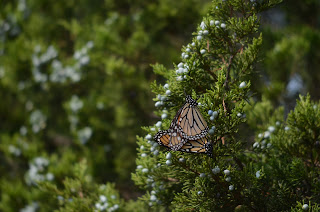
Mating Monarch Butterflies


 As well as birds, insects are beginning their migration as well. Dragonflies are zipping around in the evenings. Monarchs are starting their migration to Mexico and congregating at the tip. We have seen over 100 in a single day.

I was dropped off at the Breakwater station by a boat trip. A few days at breakwater resulted in more new birds for my year.


As with everywhere else in Ontario the fall wildflowers are blooming and the roads around breakwater were lined with flowers and hatched turtle nests.
Bouncing bet
Common mullien

American Copper

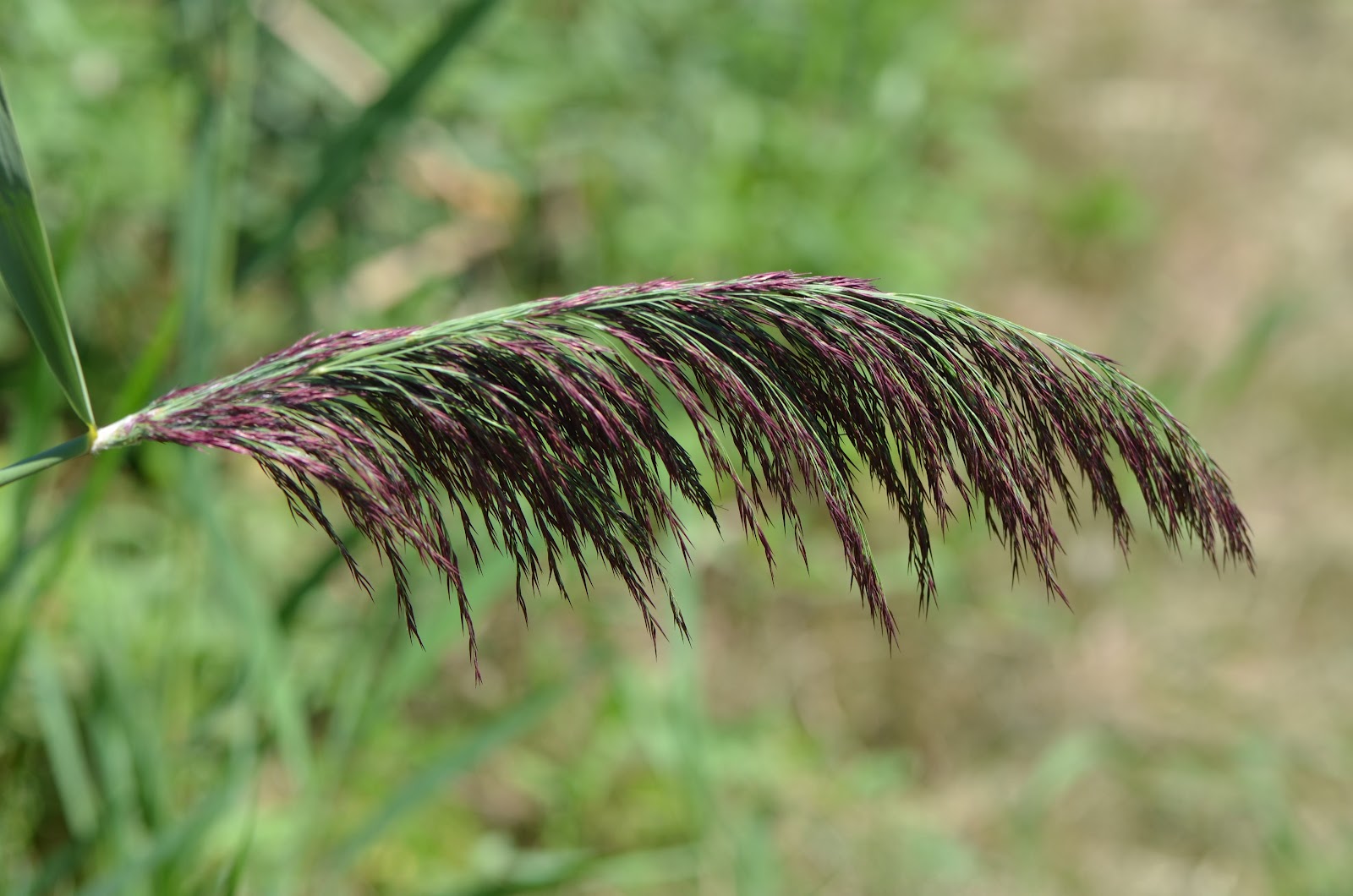
Phragmites

Sasafass tree

Morning glory flower and vine

House wren

I embarked on a 20 km night walk down the south shoreline in search for amphibian life.  This was a very nice night to walk and the amphibians were definitely plentiful. I stumbled across the largest American toad I have ever seen in my lifetime!
 The oddest thing I found on my walk was a gray treefrog on the beach! I have never seen one of these frogs on a beach before but I guess at the tip anything can happen! I believe I've mentioned it before but these are my favorite frogs in Ontario by a landslide. All of the ones I saw were in the green morph.

 Isn't it a cutie!
 Here's a bunch of pictures of them! These amazing climbers with their enlarged toe pads looked very out of place to me sitting on the beach.
Gray treefrog (Hyla versicolor)


Sunday, 12 August 2012

Blenheim Sewage Lagoons and Rondeau Provincial Park

Chris is photographing plants instead of birds?!
While visiting Chris in Chatham we took the chance to look at the birds around the Blenheim sewage lagoons. We left early in the morning and had a romantic walk around the sewage lagoons. Yes that sounds like an oxymoron and almost impossible but it happened.  There was a lot of activity in the first pool at the lagoons.


Greater scaup
Rudy duck
Wood duck
Canvasback
Great egret
Lesser yellowlegs
Lesser yellowlegs

Least sandpiper
Killdeer
Tree swallow
Barn swallow
Eastern kingbirds
Cedar waxwings
American black duck
Semipalmated plover
Semipalmated plovers
Despite not seeing the red-necked phalarope we were both hoping for it was a nice walk around the lagoons. As well as birds, there were a lot of butterflies around the wildflowers at the lagoon;
Skipper butterflies
Buckeye
Mating pair of buckeye on sweet white clover

Painted lady
Painted lady on a yellow flower
Cabbage white are very common butterflies in Ontario and a few of them were frequenting flowers around the lagoons.
Cabbage white
Black swallowtail

Later in the afternoon we stopped by Rondeau Provincial Park to help with the turtle project and to find some of our own herps in the wild. We found three five lined skinks. Two were adults and we were even lucky enough to find a juvenile with a bright blue tail characteristic of the species. Two blue-spotted salamanders surprised us when they were in an unexpectedly dry areas by the beach. 
Two blue-spotted swallowtails


Many wildflowers such as swamp rose mallow, queen Anne's lace, butterflyweed and jewelweed were blooming and attracted tiger swallowtails and red admirals.

Jewelweed/ spotted touch me not (Imatiens capensis)
Impatiens capensis
Close up of jewelweed flower
Jewelweed or the spotted touch me not is an annual succulent plant that has bright orange flowers with a hooked conical spur at behind the lobes. These bright flowers turn into hanging seed pods that explode o touch. Well you aren't going to get blown to bits here but it does help with seed dispersal and they are so much fun to pop! My first memory of discovering this plant was seeing a springer spaniel dog running through it in early fall. All of the seed pods sprung up into the air right after the dog raced by.
Queen Anne's Lace/ Wild Carrot (Daucus carota)
Queen Anne's Lace is one of the most common roadside wildflowers that I can think of. It has brilliant white flowers which resemble lace. These flowers often get it confused with its toxic relative wild parsnip which has tall yellow flowers and produces a rash when touched.  

Anemone
Anemone

Swamp rose mallow (Hibiscus moscheutos) on a floating mat
 The pink flowers poked out of the marsh shielded from view by cattails swaying in the wind. These large showy pink flowers resemble the cultivated hibiscus plants people might be more familiar with but unlike the cultivars these bright flowers are in much less hospitable places than your living room. These shrubs grow in amidst cattails on the floating mats and mudflats of marshes. Swamp rose mallow is a species at risk with a restricted habitat of wetland habitats in southern Ontario.

Butterflyweed
The brilliant orange flowers of butterflyweed really do hold it to it's name. This plant is great for attracting pollinators including butterflies and has played a large part in the restoration of natural habitats in southern Ontario. This attractive plant is one that many people have chosen to plant when they desire butterfly gardens or to plant with native species.
Tiger swallowtail on the beach

And last but not least... some parting advice for all who visit Rondeau Provincial Park: As you are leaving the park there will be a small store on your left.... STOP THERE FOR ICE CREAM!

Wednesday, 1 August 2012

Ojibway Tall Grass Prairie

It's always nice when a group of like minded individuals get together and this occasion was definitely a great example of that.

A guided tour of the Ojibway tall grass prairie led by Tom Preney attracted many of the great local naturalists including Russ Jones, Steve Marks and Steve Pike among others. We hiked the trail through this unique habitat that is home to many prairie specialists that I might have walked by completely had it not been for the knowledge of the others.
Steve Pike in the prairie
The main focus of the hike was plants but many birds and insects were also seen. The highlight of the birds were indigo buntings which I had not seen yet this year although they are not rare in Ontario. These are gorgeous birds with brilliant blue body and dark wings.

But back to the beginning now... This melanistic tiger swallowtail was the most interesting butterfly on our walk and it was found a few meters down the trail. Melanism is a lack of pigmentation that leads the creature to be all black. This can be quite rare and I have never seen it in a butterfly before today.
Melanistic Tiger Swallowtail (Papilio glaucus)
Other Lepidoptera sightings were monarchs, question marks, tiger swallowtails, skippers and a neat geometer moth.

Geometer moth
Skipper butterfly
The prairie plants were blooming and the butterflies were doing their thing! We saw prairie plants such as dense blazing star, wild bergamot, prairie milkweed, tall ironweed, woodland sunflower and many others.

Culver's Root (Veronicastrum virginicum)


The dense blazing star and prairie dock were my favorites. The dense blazing star had stems almost as tall as I am had many bright purple flowers going down them.

Dense blazing star (Liatris spicata)
Prairie dock has a bright yellow sunflower like flower and large rounded basal leaves.These are both plants very unique to prairie habitat and are quite rare in Ontario.

Prairie Dock (Silphium terebinthinaceum)
Prairie dock flower bud

Unfortunately all good things come to an end and the hike couldn't last forever. As the sun was setting common nighthawks darted across the skies and we headed out of the prairie. Naturally we then headed out for a few beers at a nearby pub.

After a nice hike there was naturally some beers.
More on Ojibway can be seen on their website > http://www.ojibway.ca/index.htm

Tuesday, 31 July 2012

July at Long Point

Tree swallow adult male
 Another month spent at the tip of Long Point, Ontario... This one was a bit slower than the last. Since the weather was so warm reptiles have had little need to search out good basking spots to heat themselves up and are less active after the urges to mate and nest have gone away. I did still see many garter snakes and mostly painted turtles.
Juvenile melanistic garter snake
My volunteer Alia, and the garter snake for perspective in size

 Can't forget the fowler's toads! Night brings out most of the amphibians I have seen. One night as I was searching for fowlers on the beach with Alia she asked me what that was and pointed n the direction of a long dead piny softshell turtle on the beach. I told her what it was and she said no not that the frog beside it. There was a huge bullfog sitting beside this rotting turtle getting what I assume to be a very large meal of flies. It shouldn't surprise me that insect eating animals should be drawn to carrion (dead things) for an easy meal like this one.
My name is Jabba the fat toad...
Fowlers (left) and American (right) toads for comparison
GIANT bullfrog!

The birds I have been seeing for the most part are local nesters, however, a few odd sighting and some early arrivals have managed to appear at the tip. The most interesting bird I have seen and a lifer for me with regrettably no pictures was a long tailed duck seen on the boat ride back to the mainland from the tip.

Brown thrasher

Eastern kingbird nest

Ruby throated hummingbird

Bank swallow nests
Bank swallow in flight

Juvenile barn swallows were fledging in the nests on the sides of our buildings

Ring billed gull

 Many predatory insects were enjoying the season so many tourists curse at. Stable fly season!
Tiger beetles on the beach
Orb weaving spider
  One afternoon after a morning of hiking 10 km Alia and I found that a racing pigeon actually had walking right into one of the UNSET traps. Our curiosity could not be helped so we found out his band number and discovered he was a first year bird on a training run.
Luke our visitor at the tip after a large thunderstorm


 Plant life always seams to be quite photogenic...


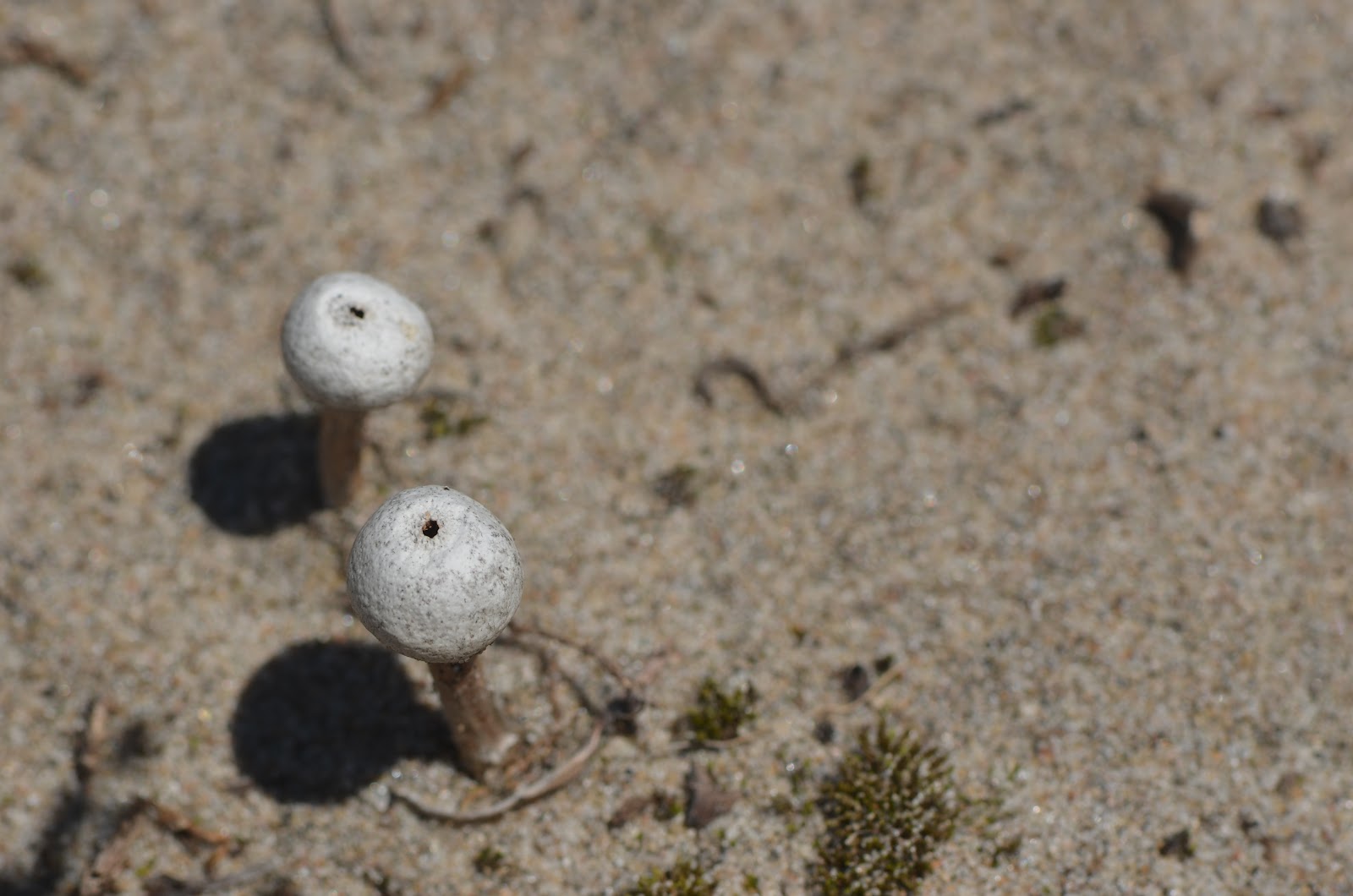
Unknown mushroom species on sand dunes