Showing posts with label Herps. Show all posts

Monday, 20 May 2019

Georgian Bay Island National Park

I have had the pleasure of camping in one of the most magical places in Ontario, Georgian Bay Islands National Park, a few times now. I always visit in the spring when the park is coming alive. We catch a boat from the marina over to the island and camp for the May long weekend. It is always a lovely great time spent with friends and friends-to-be.

The purpose of course for this journey is a survey of reptiles and amphibians of the park. This year was the coldest weather we had ever experienced on the islands with most days being rainy and it always dropping below ten degrees Celsius at night. With the weather forecast so gloomy and cold we didn't expect much to be out moving around, but we actually had a fair amount of diversity in much lower numbers than previous years.

Eastern Hognose Snakes are one of my favorites on this trip for sure. They are often mistaken for rattlesnakes due to their brown blotchy coloration.When they are being defensive they may flatten their heads and body, display like a cobra or play dead by flipping themselves over and musking.  Their prominent upturned "pig" nose is used as a shovel to dig up their favorite food, toads. Maybe it is the toad diet but these guys can really stink when they musk.
Eastern Hognose Snake (Heterodon platirhinos)
Eastern Hognose (Heterodon platirhinos)
Massasauga Rattlesnakes are fairly common on the islands. This snake is venomous but rarely bites people. Watch where you step and leave them be. They are usually coiled up and will rattle as a warning if they notice you getting to close to them. These snakes are beautiful
Massasauga Rattlesnake (Sistrurus catenatus)
Ring-necked Snakes are small snakes that rarely ever bite but do musk. When disturbed they usually coil up and hide their head. They always look glossy smooth.
Ringneck Snake (Diadophis punctatus)
 Northern Watersnakes are completely harmless snakes but can also have a brown blotchy pattern that gets them mixed up with Rattlesnakes. I was lucky enough to find a pair mating and a few young snakes. From the pair mating in the photo below the female is the larger snake and the male is the smaller snake on top of her. 
Northern Watersnake (Nerodia sipedon)
When young watersnakes have more of a pattern and these freshly shed young ones were so tiny and beautiful.
Northern Watersnake (Nerodia sipedon)
Eastern Ribbonsnakes are a long slender snake with patterning similar to an Eastern Gartersnake. Eastern Ribbonsnakes have a distinctive white crescent in front of their eye.  These snakes are fast moving and on a warm day it's very hard to get a decent photo of them. But with the weather fairly cold this particular weekend I was able to get the nicest photos I have ever taken of a Ribbonsnake!
Eastern Ribbonsnake (Thamnophis sauritus sauritus)
Most species of Ontario turtles can be found on the islands Northern Map Turtles are frequent on the rocky shores around the islands. Painted Turtles are common across Ontario, but the joy of seeing them for the first time in a year never gets old.
Painted Turtle (Chrysemys picta)
 It is very hard to pick a favorite turtle but these two are definitely both in the running. Stinkpot Turtles are small turtles with a large head with yellow stripes. Their shells are brown-olive green on top and they have a plastron that doesn't fully cover their stomach. This allows them to walk easily on the bottom of lakes and ponds. They are more active at night and at night or early morning are some of the easiest times to find them. You'll still probably have to get wet looking though. Despite the cold weather I was waist deep in water looking for them hiding under floating vegetation.
Stinkpot Turtle (Sternotherus odoratus)
Blanding's Turtles are pretty much everyone's favorite turtle. It's really hard to dislike this cheery looking charismatic turtle. The bright yellow chin makes it look like it's always smiling at you. Sadly this species is also at risk and some of the threats include cars and boats running them over. The one below was lucky enough to survive one a collision.
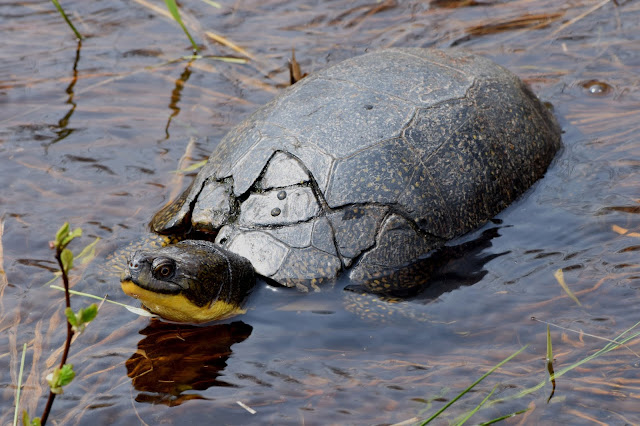
Blanding's Turtle (Emydoidea blandingii)
A lot of amphibians were starting to move on the rainy nights  and the days were filled with calls of breeding American Toads.  The most common amphibian we saw was Redback Salamanders. These small salamanders were out in mass on the rainy nights crawling over mossy and rocky surfaces.
Redback Salamander (Plethodon cinereus)
 Redback Salamanders also have a "Leadback" colour variation that lacks the red-orange stripe.
Redback Salamander (Plethodon cinereus)
The habitats on the islands are variable form rocky shorelines, deciduous forests to wetlands. This diversity of habitats brings out a variety of spring flora including Rock Harlequin, White Bog Violet, Virginia Saxifrage, Easrly Meadowrue, Yellow Trout Lily, Sharp-lobed Hepatica, Round-lobed Hepatica, Starflowered Lily-of-the-Valley, Jack in the Pulpit, Haiy Solomon's Seal, Downy Yellow Violet, Blue Cohosh, Two-leaf Toothcup, Largeflower Bellwort and Trilliums.
White Bog Violet (Viola lanceolata)
Virginia Saxifrage (Micranthes virginiensis)

Sunday, 21 April 2019

Herpin' Pensylvania for Easter - Penn-Rosevelt State Park and Black Moshannon State Park

Passing through local towns on the way from Carlisle to Clearfield, PA we saw beautiful displays of cultivated trees including Plum, Flowering Almond, Quince, Apple, Pear and Lilac. I was blown away by how well all of the flowering plants were growing. It is always a struggle to get things to bloom in Canada let alone get them to flourish like this.
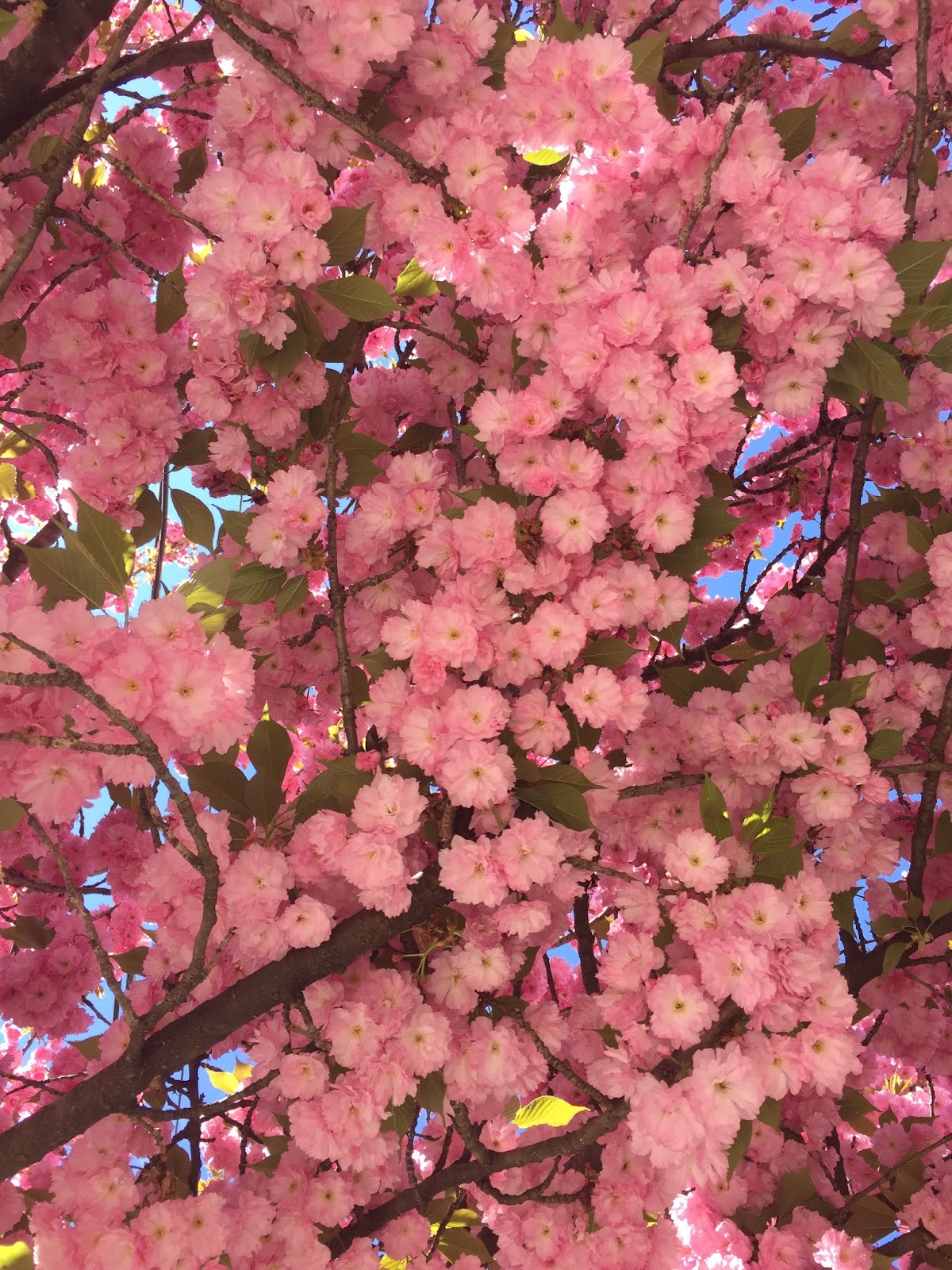
Cultivated double flower
Cultivated Flowering Dogwood
Penn-Resevelt State Park looked like it was on our way but it ended up being up in the mountains along winding dirt roads that took forever to get up. The drive was beautiful and if it was later in the year the thick under-story of Rhododendrons would have been flowering.   It didn't really have a good trail system with a short loop we could do that day.
Penn-Resevelt State Park

Penn-Resevelt State Park
Black Moshannon State Park had more interesting things to see than Penn-Rosevelt and the boardwalk was a lovely trail from the airport.
Black Moshannon State Park
Off the boardwalk you could see Marsh Marigolds in bloom and salamander egg masses.
Marsh Marigold (Caltha palustris)
A large number of salamanders was breeding in the wetland since huge clumps of egg masses could be seen just off the boardwalk.
Spotted Salamander Egg Masses
 Trailing Arbutus is a lovely small creeping plant with pink-white flowers. The shrub has hairy stems and opposite leaves.
Trailing Arbutus (Epigaea repens)
 At the end of the loop there was a scuz pond with a bunch of Green Frogs in it. I am sure there would be a bunch of frogs breeding in it at night. It looked and smelled quite gross though and sadly in some places it was overflowing into the adjacent wetland. 
Black Moshannon State Park
For Easter dinner we went to a dutch restaurant called Dutch Pantry Family Restaurant. They had lovely ham dinners.
Dutch Pantry Family Restaurant

Wednesday, 9 January 2019

El Dorado Eco Lodge and the Sierra Navada Mountains, Colombia

Our first full day we went with the forest ranger up the mountain at 4:30am. It was really foggy and at that elevation was quite chilly so I am glad we dressed for the weather. It was difficult to see birds at first with the fog and poor lighting. We drove up and then walked down with a short stop at the lookout point. It was foggy the entire time we were there but apparently you should be able to see the peak of the Sierra Navada mountains on a clear day.
El Dorado Eco Lodge and the Sierra Navada Mountains, Colombia
The birds we saw were:
Santa Marta Warbler
Santa Marta Brush Finch
Sierra Navada Brush Finch
Broad-winged Hawk
Band-tailed Pigeon
Band-tailed Pigeon
Brown-rumped Tapacula (only heard but so very close to us in the brush)
Rusty-headed Spinetail
Streak-capped Spinetail
Mountain Elaenia
White-throated Tyranulet
Montane Woodcreeper
Santa Marta Bush-tyrant
Yellow-bellied Bush-tyrant
Black Flowerpiercer
Black Flowerpiercer
Paramo Seedeater
Yellow-crowned Redstart
Santa Marta Parakeet
Scarlet-fronted Parakeet
Scaly-naped Parrot
Scaly-naped Parrot
Red-billed Parrow
Sparkling Violetear

Black-backed Thornbill

Tyrian Metaltail


White-tailed Starfrontlet
Mountain Velvetbreast
Red-billed Emerald
Santa Marta Wood Wren
Great Thrush
Santa Marta Mountain Tanager
Rufous-collared Sparrow
Tennessee Warbler
Tennessee Warbler
 White-lored Warbler

I also had the chance to find a small scorpion up the mountain.
Along the road on the way down we passed this large rock formation with packed dirt at the entrance and there were large cat prints.  The 'cat cave' appeared to go pretty deep and had multiple entrances.

After lunch I saw Black-chested Jays and Emerald Toucanets eating in the trees around the lodge property while the guan and aguti rained the compost heap and the hummingbirds fought over territory.
Emerald Toucanet
We walked down the road to look for Quetzals again and got lucky enough to find a mixed flock coming across the road. We also had a great view of woodpeckers, trogon and the female quetzal. Some of the new things for the day that we didn't see up at the top of the mountain were:

Black and White Warbler
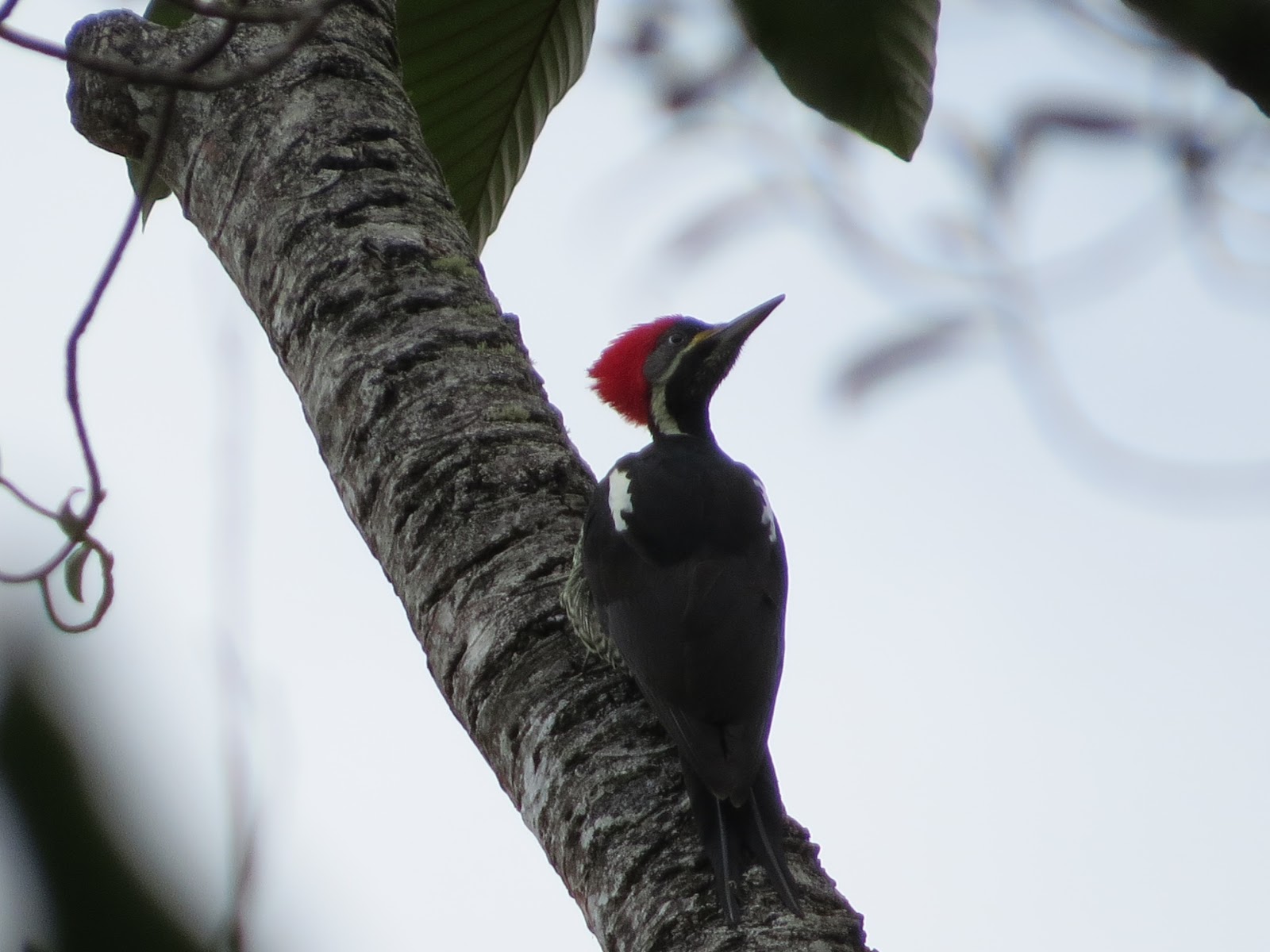
Crimson Crested Woodpecker
Blackburnian Warbler
Bay-headed Tanager
Black-striped Sparrow
White-tipped Dove
White-tipped Dove
Black-hooded Thrush
Crested Orupendula
White-tipped Quetzal

Strong-billed Woodcreeper
Santa Marta Foliage-gleaner
Masked Trogon
Yellow Warbler
Slate-throated Redstart

We walked the quetzal loop trail up to above the cabins where we sat and watched the sunset over the mountains. Now it was finally clear enough to see the peaks of the mountains beyond and we could see the ocean at Barranquilla. The clouds came in as we watched the sunset and encompassed the mountains below in this odd poisonous green coloured mist. It was quite lovely and peaceful to watch as the scenery changed colour before us.
El Dorado Eco Lodge and the Sierra Navada Mountains, Colombia
Walking back we didn't see any more herps by the creeks than the few brown frogs that were around during the day and some Pristimantis. Even those few frogs were silent. The amazing rock face with 3 snake skins had no live snakes. The bats however got incredibly active and two different sizes, one massive and one much smaller were flying up and down the trail around us.

That night after dinner two species of monkeys, Kinkaju and Night Monkeys came to be fed. The night walk had a lot less even though there were only three of us on it. It was just so dry and we only saw the endemic frog Pristimantis santamartae and the endemic tarantula Kankuamo marquezi. The little salamander was even further tucked into its bromeliad as much of the water had evaporated.