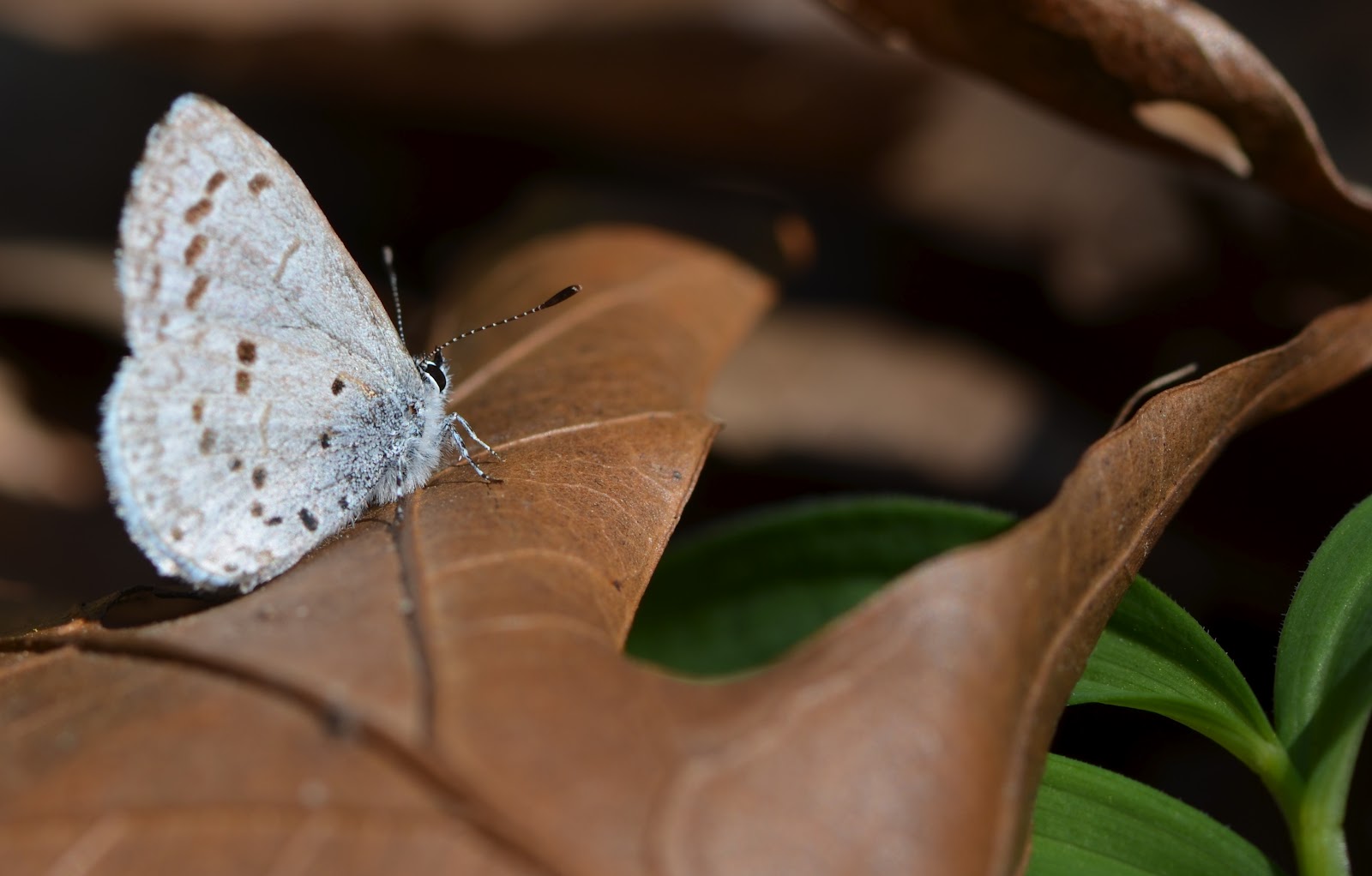
I spent two lovely weekends in a row down in one of Canada's best birding hotspots. Point Pelee National Park is world renowned for bird watching during migration periods. I love visiting this area during spring when the birds flock back northwards in their breeding best. Migration typically occurs in waves with birds arriving at various times based on weather patterns and species.
 |
| Point Pelee National Park Marsh Boardwalk |
 |
| Barn Swallow |
The weekends I spent there were very different but both weekends were great for birds. The first weekend I was with co-workers and we saw many of the typical early migrants. There were Rose-breasted Grosbeaks, Yellow-rumped Warblers, Blue-headed Vireos, Winter Wrens, Common Yellowthroats, Veery, Gray Catbirds, Northern Waterthrush, Black-throated Blue Warblers, Black-throated Green Warblers, swallows and sparows.
 |
| Yellow Warbler |
My favorite find of the weekend was actually a Orange-crowned Warbler. These aren't a rarity for Ontario or for the park itself but it had been years since I had personally seen one and I ended up with a great view of it foraging in juniper bushes.
 |
| Orange-crowned Warbler |
Spring flora was also just starting in the park but Spring Beauty and Duchman's Breeches were common in the woodland under-story. Ruby-throated Hummingbirds arriving at the point after crossing the lake went straight for the Duchman's Breeches on the tip.
 |
| Narrow-leaved Spring Beauty (Claytonia virginica) |
 |
| Duchman's Breeches (Dicentra cucullaria) |
One of my favorite places in Point Pelee has always been the swamps. These weekends were no exception with great views of many species.
 |
| Northern Waterthrush |
 |
| Gray Catbird |
 |
| Downy Woodpecker on a Hackberry Tree |
The highlight of the swamp was actually a Brewer's Blackbird, which was a lifer for me I think.
My second weekend at Point Pelee I drove down from Grand Bend and I had the joy of finding a Bald Eagle nest along the road. The adults were both nearby perched in trees along the river. The juvenile wasn't flying yet but was pretty much fully grown and poking its head out of the nest a lot.
 |
| Bald Eagle nest with juvenile |
I arrived at Pelee in good time and was the first of my group of friends to get there. So I walked around the park for a while and met up with some other friends that were in the park birding. They told me about a rarity to show up in the park right along the trail and even though they had seen it hours ago I figured it was worth a shot. I had no idea how much of a treat it would be to see. The Yellow-throated Warbler was easy to spot and right along the trail so at some points it was too close to get pictures of.
Yellow-throated Warblers are GORGEOUS flitting gems. I watched it for an hour flitting from tree to tree right along the trail completely ignoring a large group of onlookers that had gathered.
 |
| Yellow-throated Warbler |
The bird rarely sat still but I managed to haphazardly get a few decent shots. Nothing compared to my other friends that had seen it earlier, including
Josh Vandermulen. It behaved almost like a Nuthatch or Brown Creeper the way it circled trees up and down catching insects.
 |
| Yellow-throated Warbler |
The Yellow-throated Warbler stuck around long enough for my friends who were arriving a few hours later than I to arrive and come see it. But despite it hanging around the same trail for the entire day on Friday it had disappeared by Saturday.
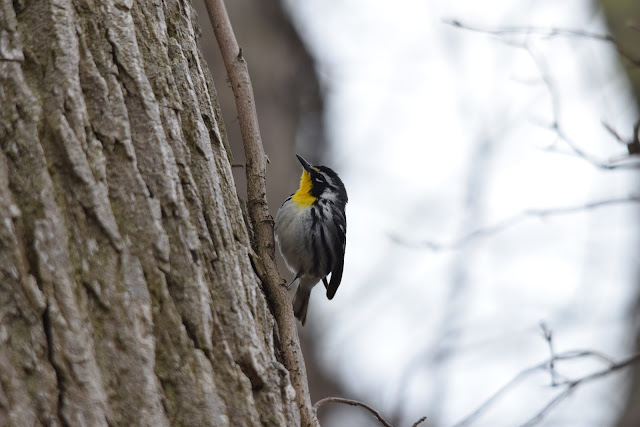 |
| Yellow-throated Warbler |
Little did I know that that beautiful little rarity was the start to one of the best birding weekends I have ever had at Point Pelee.
 |
| Point Pelee National Park |
Fallouts or groundings of songbirds occur when a warm weather front
advancing from the south or southeast meets a cold weather front moving
in from the north or northwest. Birds will descend and stay in the area and in some cases may be very close to the ground or get very close to people in their desperation to find food to fuel their continued migration. I am not so sure if this was technically a fallout weekend or just large numbers of species happened to be passing through at the time of my visit, but there was a huge diversity of warblers and they were pretty much all foraging on the ground or at eye level rather than up in the trees where it's difficult to identify them.
 |
| Common Yellowthroat |
 |
| Magnolia Warbler |
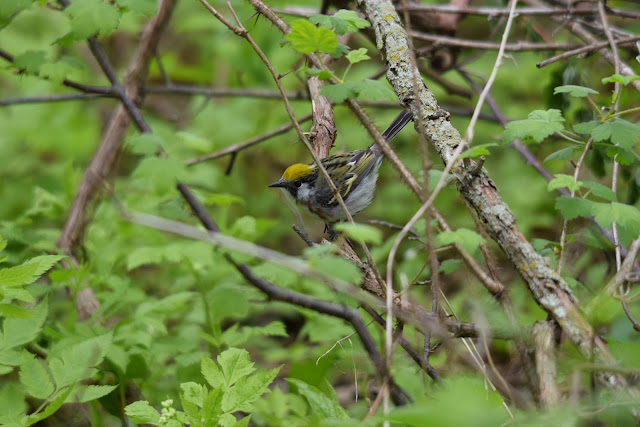 |
| Chestnut-sided Warbler |
My warbler highlights of the weekend besides the Yellow-throated Warbler were Yellow Breasted Chat, Worm-eating warbler, Prothonotary Warbler, Nashville Warbler, Kentucky Warbler, Cerulean Warbler, Blackburnian Warbler and Canada Warbler.
 |
| Pine Warbler |
Since I first saw them when I worked in Point Pelee National Park for a summer, Backburnian Warblers have always been one of my favorites. I have never been able to get quite as good of a look at them as I was this weekend when one just came curiously right up to us along the trail then kept on foraging along it.
 |
| Blackburnian Warbler |
 |
| Blackburnian Warbler |
The flooded swamp trails didn't stop us from wading along in our rubber boots to see a Prothonotary Warbler. But really it was actually on the other side of the swamp and we could have just gone around on the dry path. Ohh well it was fun.
 |
| Prothonotary Warbler |
A Cerulean Warbler showed up as we were headed back to the visitor center and was actually foraging on the ground really close to the trail. I was a bit concerned for the bird since I had never seen this species so low to the ground and at some points it looked quite tired, but it was moving around and catching things so I expect it will be alright once it eats its fill.
 |
| Cerulean Warbler |
After having such a good day for birds we went around the park trying to find some of the last specific warblers we were missing for our weekend list. This included going out looking for Wilson's and Kentucky.
 |
| Wilson's Warbler |
Both species were found pretty easily in places other birders had seen them that day and we still got great views of them foraging down low. I am really not sure if it was the weather or if the trees hadn't leafed out enough to provide food higher up in the canopy but this weekend really was an insane warbler weekend.
 |
| Kentucky Warbler |
 |
| Kentucky Warbler |
Crepuscular birds are those primarily active at twilight. This term is usually applied to nighthawks, nightjars, swifts, whip-poor-wills, woodcocks and some owls. Usually their camouflage makes it easy for them to hide in dense trees like the Chuck-will's-widow below perched in a dense patch of cedar. Jeremy said he spotted it thanks to other birds acting oddly around the tree and I was lucky enough to arrive after it had been found.Chuck-will's-widows look very similar to Eastern Whip-poor-wills but differ in size and coloration. It is a subtle difference and I am not so confident that I would have been able to confirm this bird as a Chucks myself. Their calls are very easy to distinguish but they are quiet during the day.
 |
| Chuck-will's-widow |
We were able to get the trifecta of crepuscular birds by going to where they had been seen previously but they were unusually easy to spot. It was a first for me to see a Whip-poor-will sitting out in the open like this. Again I must admire
Josh's lovely photos.
 |
| Eastern Whip-poor-will |
 |
| Common Nighhawk |
Scarlet Tanagers were quite common in the park but a Summer Tanager was sighted just outside the park in someones yard. The bird couldn't get more photogenic than sitting in a planted Magnolia Tree.
 |
| Summer Tanager |
 |
| Summer Tanager |