Showing posts with label Tree Frogs. Show all posts

Monday, 14 October 2019

There is a Road...

There is a road down in Southern Illinois that closes each year to vehicle traffic so that wildlife (and specifically reptiles) can cross from the swampland to hibernacula up in the rocky cliffs. This road is a frequented spot for herpers across North America and a place I have visited fairly often on the Thanksgiving weekend. The border guard this year actually asked me "What about your family?!". Luckily my family is indulgent of my crazy hobby and we celebrate with a turkey dinner on a different weekend.


We drove throughout the night to get to southern Illinois from Ontario and didn't even try to get any sleep before heading out for a walk down the road. With the rain that had hit overnight and the continued spitting throughout the day we had a great day for amphibians. Our first sightings were Green Tree Frogs (Hyla cinerea). 
Green Tree Frog (Hyla cinerea)
Soon after as we walked further down the road we started finding Northern Slimy Salamanders (Plethodon glutinosus), Eastern Newts (Notophthalmus viridescens) and Zigzag Salamanders (Plethodon dorsalis).
Northern Slimy Salamanders (Plethodon glutinosus)
Zigzag Salamander (Plethodon dorsalis)
 We even found a little tiny newt beside a fully grown one. It was very neat to see the size difference.
Eastern Newts (Notophthalmus viridescens)
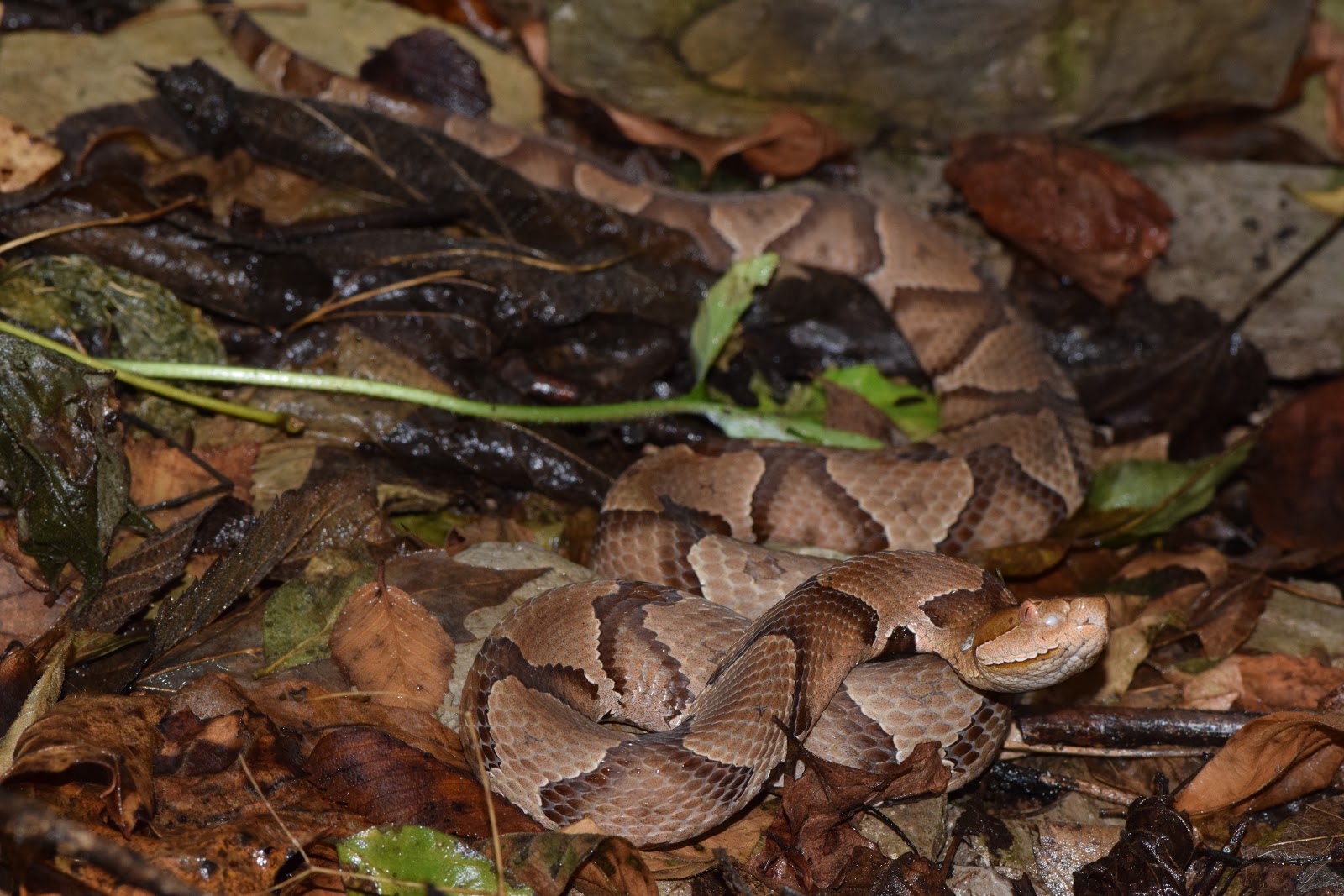
After finding a salamander we were just standing around chatting in a circle and a lovely Copperhead just went straight in between us!!  It was quite surreal and surprising. They are so well camouflaged and we were all standing still but we caught the movement out of the corner of our eyes when it was actually beside us. A very pleasant surprise indeed!
Eastern Copperhead (Agkistrodon contortrix)

Eastern Copperhead (Agkistrodon contortrix)
One of my favorite finds of the day wasn't something uncommon but just a beautiful freshly shed Ringneck Snake (Diadophis punctatus). The iridescence on this snake was breathtakingly beautiful. I am still working on my photography skills so I couldn't really capture quite how stunning it was so you'll just have to trust me. But hopefully these photos give you a little bit of a sense.
Ringneck Snake (Diadophis punctatus)
Normally this species will hide their heads under their body or tail so I was very happy that this one obliged me with a nice pose. They typically are noctural and will eat slugs, earthworms and salamanders among other things.
Ringneck Snake (Diadophis punctatus)
Northern Cottonmouth (Agkistrodon piscivorus) were one of the most common species we found on the road. They were actually coming straight out of the swamp and crossing the road in front of us. Sometimes they even dragged a bunch of wet vegetation with them! I am very grateful that this road gets closed to vehicle traffic for all the creatures that live there because we saw over 10 of them right on the road! It was a great day for them to move.
Northern Cottonmouth (Agkistrodon piscivorus)
 At one point we looked up and saw a Gray Ratsnake (Pantherophis spiloides) coming out of a hole in the cliff just like you saw all the snakes doing in Indiana Jones.
 Other cracks had lonely little toads peeking out of them.
 On almost every single one of these trips I manage to see a Timber Rattlesnake, BUT they are always deep in the cracks and I have NEVER seen their face or gotten a decent photo of one. This year changed that. It was still in a crack but at least not very deep and it was definitely looking straight out at me as I took a picture.
Timber Rattlesnake (Crotalus horridus)

 We also got to see a few Western Ribbonsnakes along the road over the course of the weekend.
Western Ribbonsnake (Thamnophis proximus)

We went out looking for more thing after dark and found Long-tailed Salamanders (Eurycea longicauda) and Cave Salamander (Eurycea lucifuga).
Cave Salamander (Eurycea lucifuga)
A Southern Leopard Frog (Lithobates sphenocephalus) was also just hanging out in a small puddle of water.
Southern Leopard Frog (Lithobates sphenocephalus)
 On our last night in Illinois we had another great night for Green Tree Frogs and even found a gorgeous Rough Greensnake (Opheodrys aestivus)
Green Tree Frog (Hyla cinerea)
Rough Greensnake (Opheodrys aestivus)
 You can hike up to the top of the cliff face and get a lovely view over the swampland below. The difference in feeling being in the swamp vs up on the cliffs is a bit indescribable but the sunset is beautiful to see from both spots. Down below you see the light slowly fading and creating light trails between the trees that tower above you. Up above you see the entire landscape stretching out below you and even the towering tees look small in the distance as they change colour with the glow of setting sun.

The Mississippi River is a natural barrier to species movement and a lot of different species occur  across the border in Missouri. We took a morning to go exploring in a different area that I had never been to before and it was amazing!
The holy grail we were looking for in this unique place was a Plains Hognose (Heterodon nasicus gloydi) and we managed to spot one curled up basking just at the edge of a clump of grass. They blend in so well it would be easy to miss. We also saw Six-lined Racerunners but they were far to fast for me to get a photograph of!
Plains Hognose (Heterodon nasicus gloydi)
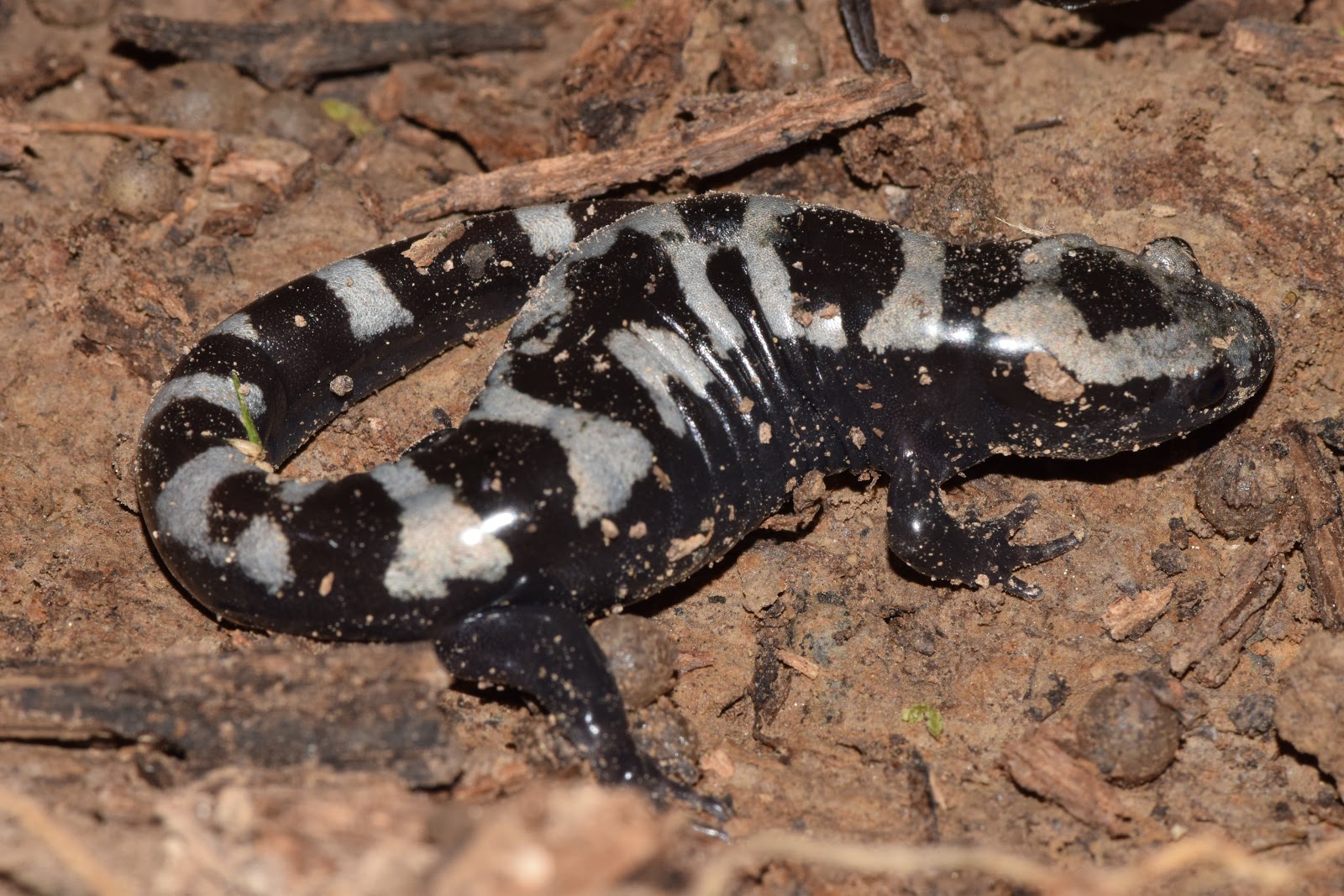
After our traditional all you can eat friend chicken dinner that makes me feel like I need to be rolled out of there and get my heart checked. We checked out a spot at night for Salamanders and  had a lot of luck! Marbled Salamander (Ambystoma opacum) are obviously banded with white and black
Marbled Salamander (Ambystoma opacum)
This species lives in damp woodlands and requires seasonally flooded areas to breed. Unlike other Ambystomid salamanders they don't deposit egg masses in the spring within vernal pools. You can see these are actually present in the fall and deposited under moist logs in seasonally flooded areas. This gives Marbled Salamander hatchings a bit of a head start in the spring.
Marbled Salamander (Ambystoma opacum)
 Mole Salamander (Ambystoma talpoideum) are derpy looking. I don't know what else to say about these guys. I love them. They are stocky and have a much larger head than you would picture them having. They look derpy and they make me smile. 
 Mole Salamander (Ambystoma talpoideum)
 Mole Salamander (Ambystoma talpoideum)
 Small-mouthed Salamander (Ambystoma texanum) are also unproportioned, but don't really look as derpy because of it. They have a characteristically small head for their body size and of course are aptly named for their small mouth. 
Small-mouthed Salamander (Ambystoma texanum)
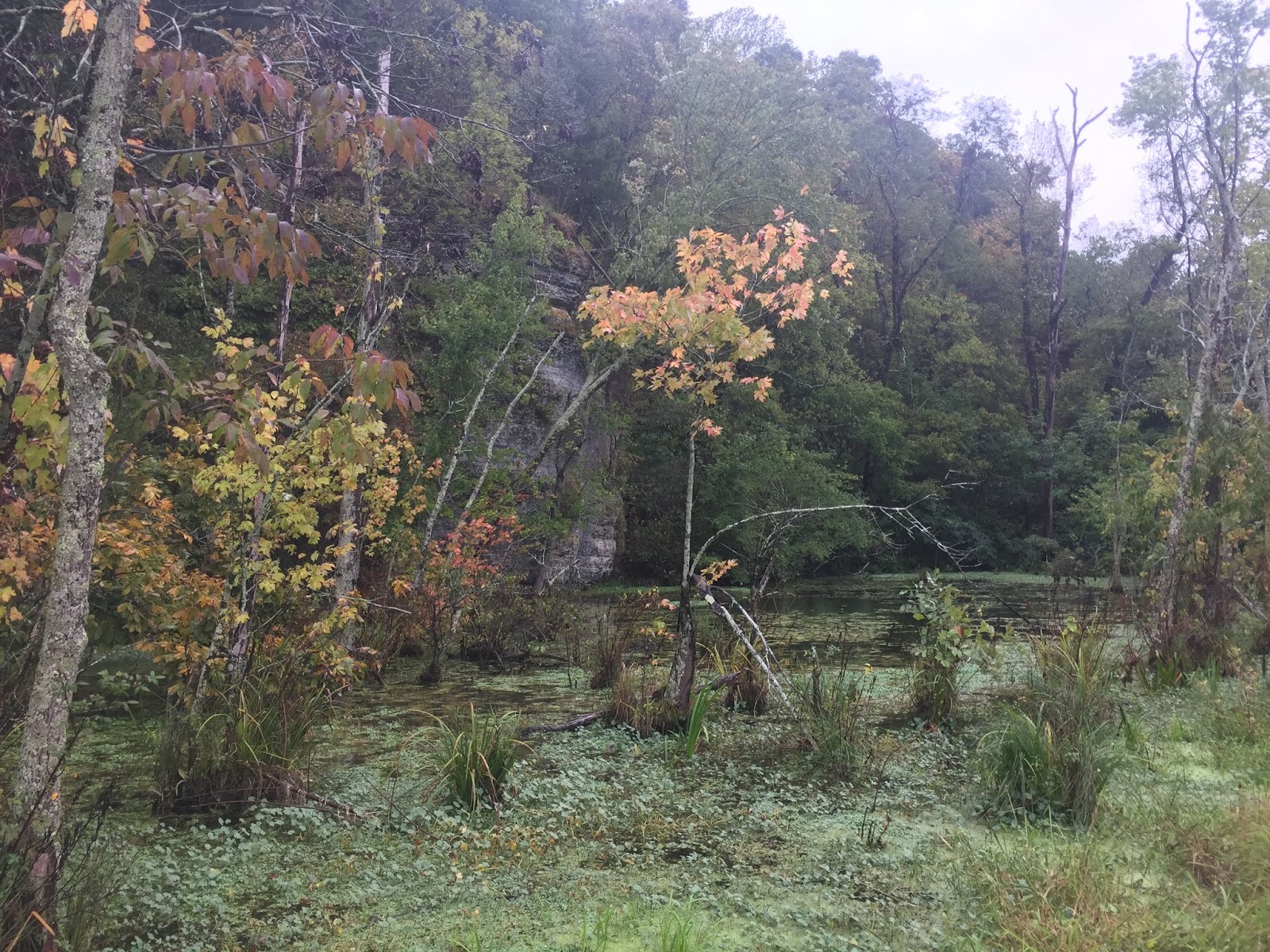
 Our last day down in Illinois we went to a cyperes swamp area surrounded by deciduous forest. There are lovely walking trails and a boardwalk that takes you a bit out into the swamp.


While we were in the swamp we saw a Cottonmouth swimming in the water. It left a trail right through the duckweed so you could tell exactly where it came from. There were a lot of basking sliders along the river but it was a fairly warm day and they spooked before we could get anywhere close to them.

As we walked around we found a few cool things including:
Common Box Turtle (Terrapene carolina)
Crane-fly Orchid (Tipularia discolor)
Northern Cottonmouth (Agkistrodon piscivorus)
Plain-bellied Watersnake (Nerodia erythrogaster
Plain-bellied Watersnake (Nerodia erythrogaster)

Wednesday, 22 August 2018

Fauna of Kagamino Park (鏡野公園) at Kochi University of Technology Kami Campus, Kochi Prefecture, Japan

To accompany the flora list for Kagamino Park (another blog post) I have started for this park I have put together a list of fauna observed in the park.These two blog posts represent a continuous record of observations in the park near my home in Japan.

Birds:
Barn Swallows don't nest in the park but on houses and sheds outside of the park. They frequently forage on campus. 
Barn Swallow
European Tree Sparrows are frequent on campus in all seasons and frequently forage in the park with potential nesting pairs in the park.
House Sparrow

Japanese White Eyes were quite common in the park in the spring but later it was less common.
Japanese White Eye
Japanese Wagtails are more abundant in the agricultural land around the campus but only occasionally come to feed on the lawn in Kagamino Park.
Japanese Wagtail
Pale Thrush look very similar to American Robins but without the red breast. They are common during the winter months and early spring but I believe they migrate out of the area for the summer.
Pale Thrush
A few pairs of Blue Rock Thrush nest in the area near Kagamino Park, potentially on the rooftops of campus buildings) and after arriving in the spring these were a daily sight on campus and occasionally foraging in the park. The females are speckled and grey-brown and the males are blue with a robin red belly.
Blue Rock Thrush Female

Blue Rock Thrush Male

Eyebrowed Thrush were another apparently migratory species that were seen in the winter but not in the
Eyebrowed Thrush
Black-eared Kites are the most common bird of prey in this area and although no nests were seen in the park so far they do perch and fly over the park often.
Black-eared Kite

Oriental Turtle Doves are quite common in the park in all seasons and are a daily sight in the park.
Oriental Turtle Dove

Rock Doves (Feral Pigeon) are definitely abundant on campus and find shady roosts in the park trees on occasion or forage on the park lawn.

Carrion Crows are more abundant than Large-billed Crows in the park but both are fairly common.
Carrion Crow
 A single Varied Tit was seen in the park along with the more abundant Japanese Tits (taking about the birds here sicko!)
 Varied Tit

Japanese Tit

Asian Brown Flycatchers were only seen a few times in the park. Their dull brown colour makes them inconspicuous but they do have a pretty song.
Asian Brown Flycatcher
White-cheeked Starlings are quite common in all seasons in the park and surrounding agricultural areas.
White-cheeked Starling
Daurian Redstarts were seen only in the spring. These weren't abundant on campus but the males are a nice bright blue flash zipping through the trees although smaller than Blue Thrush.  The females are redish brown.
Daurian Redstart Male
Daurian Redstart Female
Gray Herons were occasionally seen around the pond area or in the creeks and I imagine egrets might also occasionally come to the area to feed on small fish or frogs.
Gray Heron
Brown Shrikes were seen in the agricultural areas just outside of the park and likely go into the park area as well.
Brown Shrike
Brown Shrike
 Oriental Greenfinches are occasional summer visitors to the agricultural areas in the area and sometimes in the hedge around the parking lot field of Kagamino Park.
Oriental Greenfinch

Brown-eared Bulbuls are one of the most common birds on campus and definitely the loudest. These birds don't sound very pretty and that is by far an under exaggeration since they sound horrible with crazy screeching noises. 

Brown-eared Bulbul
Brown-eared Bulbul

Japanese Pygmy Woodpecker are really tiny cute birds that I love to find in the park. They were there from spring and still seen in the summer so they are potentially nesting in the park as well.
Japanese Pygmy Woodpecker

Reptiles:
Japanese Rat Snakes (Elaphe climacophora) eat frogs and mammals and on rainy days they can be seen basking in the park.
Japanese Rat Snake (Elaphe climacophora)
Tiger Keelbacks (Rhabdophis tigrinus) are more abundant in the agricultural areas where they eat amphibians. These little guys have a neurotoxic venom although small rear fangs make a poor delivery system. They are also one of the few species of snakes that are both venomous AND poisonous.  These guys are pretty wiry and quick to run away but if cornered they will flatten their head into a hood and try to look threatening.
Tiger Keelback (Rhabdophis tigrinus)
 Japanese Grass Lizard (Takydromus tachydromoides) are the most common reptile in Kagamino park where they live around rocks, bases of trees and piles of cut grass. 
Japanese Grass Lizard(Takydromus tachydromoides)
Amphibians:
Japanese Tree Frogs (Hyla japonica) are small cute frogs with green-brown bodies and a brown-black eye stripe. Flanks can be flecked with gold. They don't breed in the large pond in the park but they can be seen on rainy days or in the creeks.
Japanese Tree Frog (Hyla japonica)
American Bullfrogs (Lithobates catesbeianus) are an exotic species in Japan since they were brought here as a food resource. They are exotic all over the country and are the largest American Bullfrogs I have ever seen!! This species do breed in the big pond in Kagamino Park. The
American Bullfrog (Lithobates catesbeianus)

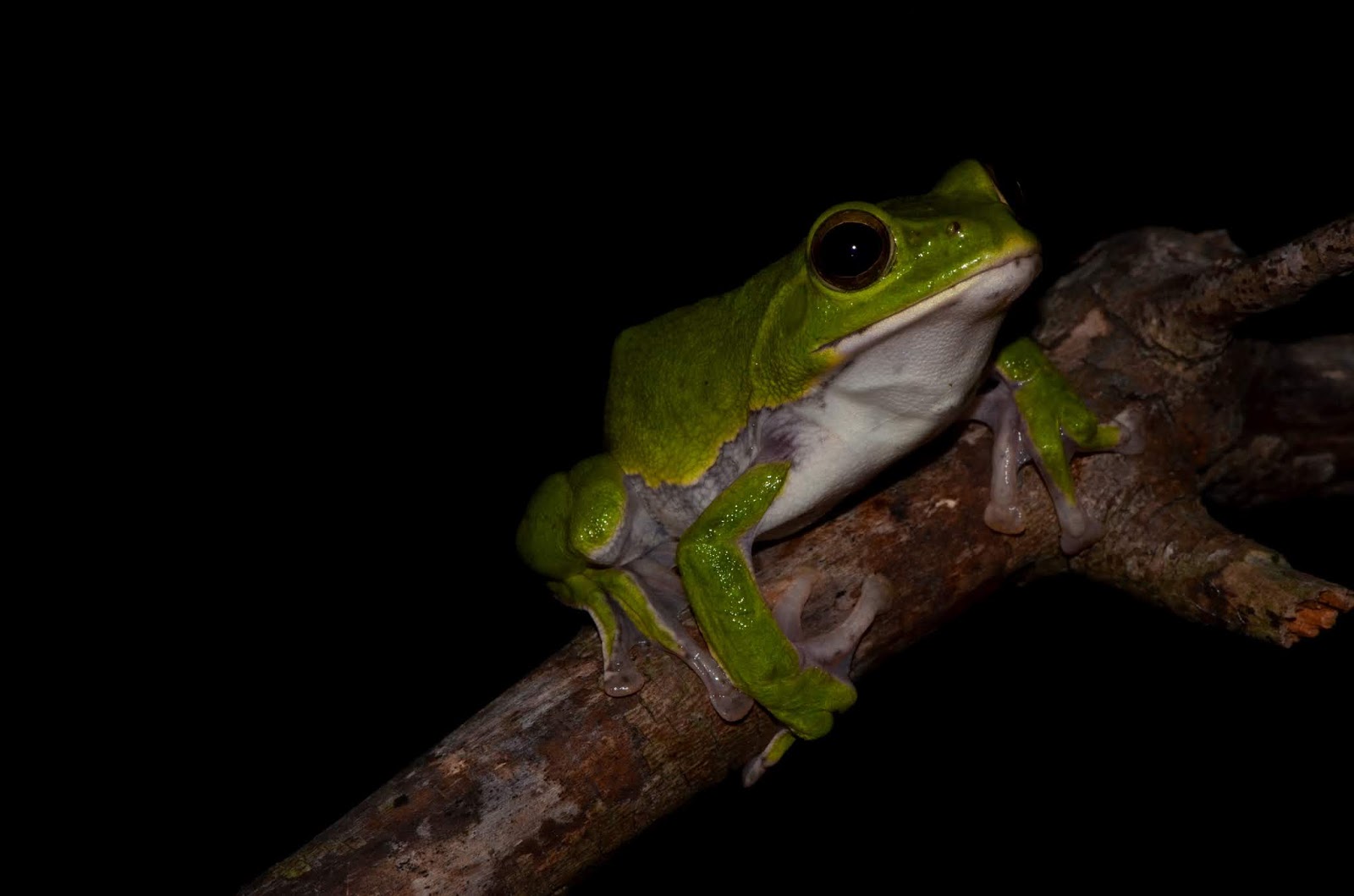
Schlegel's Green Tree Frogs (Rhacophorus schlegelii) don't breed in the park but I did see them foraging on rainy nights after the breeding season. 
Schlegel's Green Tree Frog (Rhacophorus schlegelii)

Black-spotted Frog (Pelophylax nigromaculatus) are fairly common in the area and are fairly common in the park
Black-spotted Frog (Pelophylax nigromaculatus)

A Wrinkled Frog (Glandirana rugosa) was the first species of frog that I saw in the park by flipping over a block of wood in the early spring.
Wrinkled Frog (Glandirana rugosa)

Mammals:
Horseshoe Bats  (Rhinolophus sp.) can be seen at night foraging in the park and roosting in the trees as they eat their prey. Some larger trees on campus do have potential hollow roosting sites in them.
Horseshoe Bats  (Rhinolophus sp.)
Japanese Raccoon Dogs (Nyctereutes procyonoides ssp. viverrinus)  are found in the area and I am sure they can be seen in the park on occasion although no dens have been found.
Japanese Raccoon Dog (Nyctereutes procyonoides ssp. viverrinus
 A few small mammals also live on campus but I haven't gotten a good enough look to see what species they were. Possibly Smith's Vole or Japanese Field Mouse, which are species local to the area.
 
Lepidoptera (Butterflies and Moths):
I am sure there are many more butterfly and moth species that I couldn't find on campus since I have yet to do any light trapping for moths and a few butterflies escaped photographs. These species are just some species on campus. 
Pogonopygia nigralbata ssp. nigralbata
Common Fivering (Ypthima argus)

Common Beak (Libythea lepita)
 Neope goschkevitschii
Neope goschkevitschii

Potanthus flavus
Potanthus flavus
Kunugia undans is a large moth with a grey-pink caterpillar with blue hair that pops out in a defense response.


Kunugia undans
The caterpillars of Impatiens Hawk Moth (Theretra oldenlandiae) have many eye spots along their sides and a black spine with a white tip.
Impatiens Hawk Moth (Theretra oldenlandiae)

Swallowtails (Papilio machaon hippocrates) are brightly coloured caterpillars and grow up into large yellow butterflies. These are quite common in the park and feed on thistles and the other abundant wildflowers on campus. There are at least four species of swallowtails on campus. Three are mostly black in colour but the only one that sits still for even a moment is this species.

Swallowtail (Papilio machaon hippocrates)
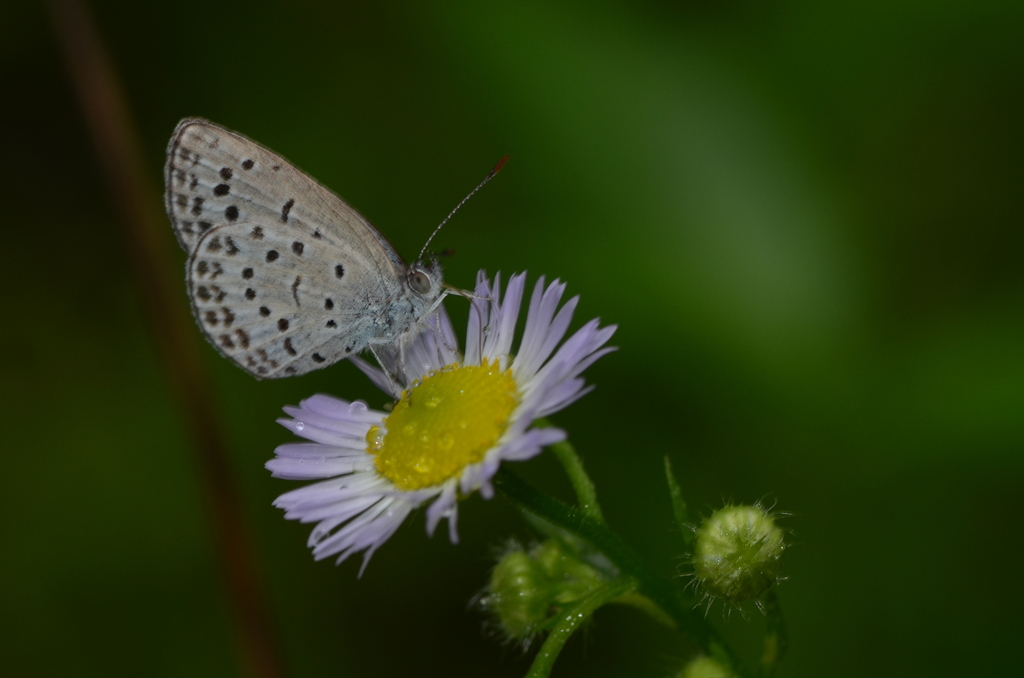
There are a few species of Typical Blues in Tribe Polyommatini. Only one I managed to identify. 
 Typical Blues Tribe Polyommatini
 Short-tailed Blue (Everes argiades) are quite commone on campus and can be found in the mowed lawn feeding on abundant clovers.

 Short-tailed Blue (Everes argiades)
Swallowtail (Papilio protenor demetrius)  is a large black swallowtail
Pidorus glaucopis is a moth with a red head and dark wings with white stripes
Japanese Oakblue (Arhopala japonica) has brown wings outer with bright blue inner wings.
Japanese Oakblue (Arhopala japonica)
Amata germana ssp. nigricauda
 Japanese Coppers (Lycaena phlaeas daimio) are incredibly abundant butterflies in this region of Japan. They are gray and orange with many black spots. They feed on a lot of wildflowers including Erigerons and Asters.

Japanese Copper (Lycaena phlaeas daimio)

Dagger Moths (Acronicta) are really well camouflaged
Dagger Moths (Acronicta
Indian Fritillary (Argyreus hyperbius)
  Krananda latimarginaria is a types of geometer moth with angled wings.
Krananda latimarginaria
Odonata (Dragonflies and Damselflies)

Aciagrion migratum is a small blue damselfly.
Aciagrion migratum

Atrocalopteryx atrata is a larger type of damselfly with dark wings and dark iridescent green body. They are quite common along the drainage ways in the countryside of Japan and in Kagamino Parks ditches as well.
Atrocalopteryx atrata

Orthetrum japonicum
Orthetrum japonicum

Orthetrum albistylum ssp. speciosum

Crimson Marsh Glider (Trithemis aurora)
 Asiagomphus melaenops
Asiagomphus melaenops

Meadowhawks Genus Sympetrum
 Pied Skimmer (Pseudothemis zonata)
 Pied Skimmer (Pseudothemis zonata)
White-Tailed Skimmer (Orthetrum albistylum) 

Bees and Wasps:
Japanese Giant Hornet (Vespa mandarinia japonica)
Apis sp.
Hornet (Vespa sp.)

Sphex argentatus ssp. fumosus  is a thread waisted wasp that is quite large and fully black in colour.
Furrow Bees (Halictus) live in the ground in the mowed lawn.
Polistes japonicus is a normal looking hornet.
Polistes japonicus
Ichneumonid Wasps (Family Ichneumonidae)
Chalybion japonicum is a large blue wasp.
Chalybion japonicum

Large Red-tailed Bumble Bee (Bombus lapidarius)   
Genus Lasioglossum
Xyclopa appendiculata
Beetles:
My favorite by far is the Tamamushi (Chrysochroa fulgidissima), which is a large jewel beetle. It has a metallic green-blue carapace with copper racing stripes. The underside is brilliant green-copper iridescent metallic. I only found a dead one in the park so no brilliant photos of this species yet sadly. 
Oriental Beetle (Exomala orientalis)
Little Stag Beetle (Dorcus rectus) feeds on the sap of trees and can usually be seen at night.
Little Stag Beetle (Dorcus rectus)

Asian Lady Beetles (Harmonia axyridis) are black with red spots.

Seven-spotted Ladybird (Coccinella septempunctata)

Seven-spotted Ladybird (Coccinella septempunctata)
 Eusilpha japonica
 Eusilpha japonica
Pheropsophus jessoensis
Genus Monolepta
Monolepta
Themus episcopalis
Themus episcopalis

 Cupreous Chafer (Anomala cuprea)
Cupreous Chafer (Anomala cuprea)

Hadda Beetles (Henosepilachna vigintioctopunctata) look like lady beetles but they are almost hairy looking.
Hadda Beetle (Henosepilachna vigintioctopunctata)

Japanese Beetles (Popillia japonica) are the most common species on campus and feed on many of the shrubs and vines.

Japanese Beetle (Popillia japonica)

Pale and Green Leaf Chafers Genus Anomala

Plesiophthalmus nigrocyaneus
  Leptura modicenotata
 Leptura modicenotata

Paraglenea fortunei feeds on Boehmeria species that are abundant along the creeks and waterways in the park.
Paraglenea fortunei
Arachnids (Spiders):
Argiope amoena is a large garden orbweaver spider with yellow stripes. 
Argiope amoena
 Argyra Orchard Orbweaver (Leucauge argyra) 
Argyra Orchard Orbweaver (Leucauge argyra)
 Neoscona scylloides is a small green orbweaver spider. 
Neoscona scylloides
Other orbweavers include various species with both thin or rounded abdomens.
Orbweaver
Orbweaver
Orbweaver

Entelegyne Spiders (Infraorder Entelegynae) 

Moluscs:
Pupinella rufa is a small species of snail living on some rocky walls in the park.
Pupinella rufa
Channeled Applesnails (Pomacea canaliculata) area really abundant int he rice fields outside of the park and can be found in the creeks and waterways of the park and campus.
Channeled Applesnail (Pomacea canaliculata
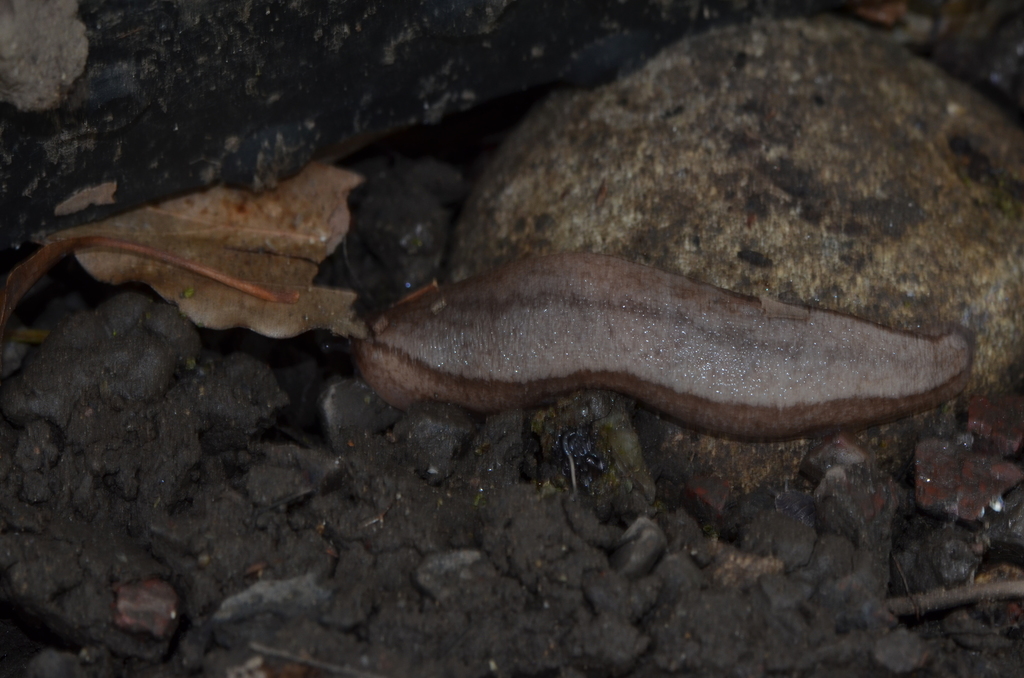
Meghimatium bilineatum is a large slug that I found under some wood debris in the park.
Meghimatium bilineatum

Helicoid Terrestrial Snails (Euhadra sp.) live on vegetation in the park.

Helicoid Terrestrial Snails (Euhadra sp.)
 Other Insects and Invertebrates:
 Chinese Red-headed Centipede (Scolopendra subspinipes ssp. mutilans)
Chinese Red-headed Centipede (Scolopendra subspinipes ssp. mutilans)

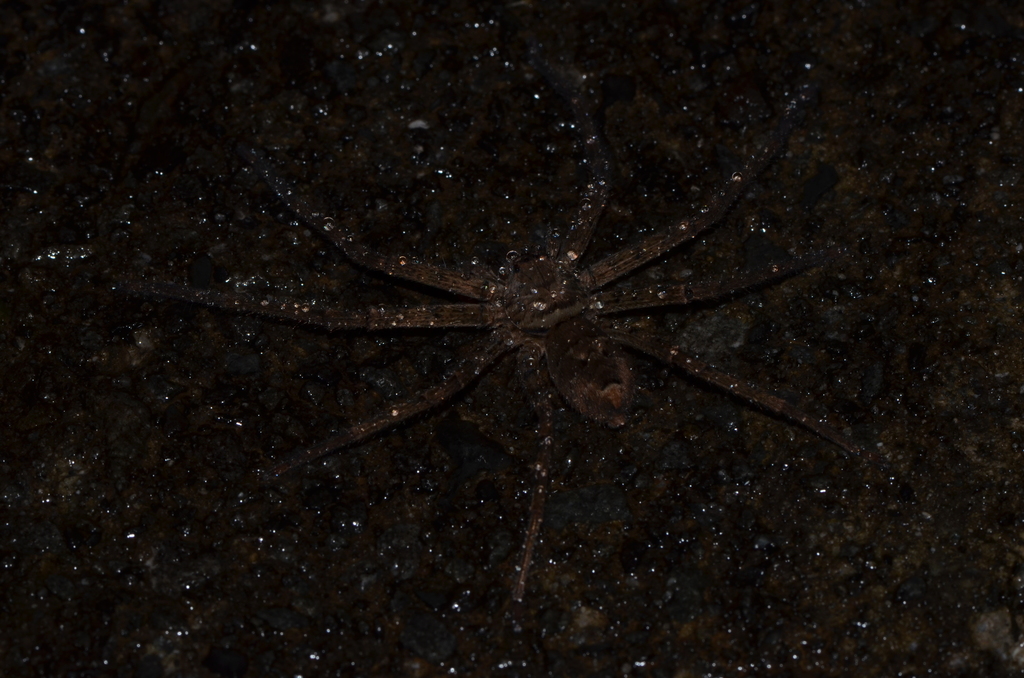
Water Striders (Aquarius)
  Aquarius
 Oriental Cockroach (Blatta orientalis)
 Oriental Cockroach (Blatta orientalis)
 Wood Cockroaches: Family Ectobiidae
Wood Cockroaches: Family Ectobiidae

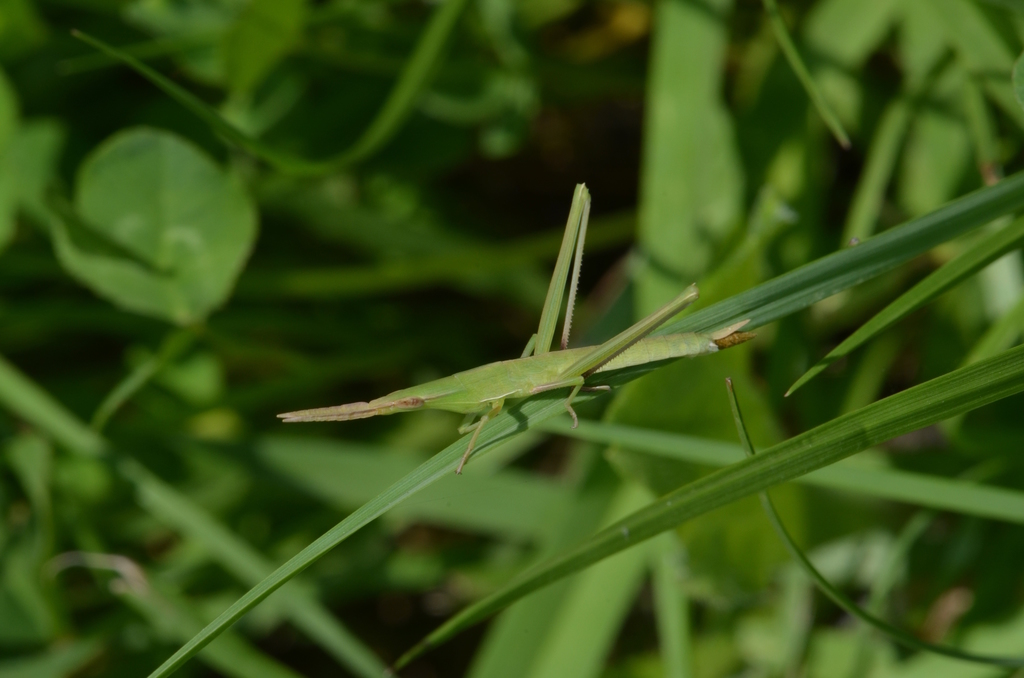
Oriental Longheaded Locust (Acrida cinerea)  
Oriental Longheaded Locust (Acrida cinerea
Migratory Locust (Locusta migratoria)  
Gampsocleis
Gampsocleis
Praying Mantis (Tenodera)
Prionus insularis
Euricania c.f facialis
Riptortus
Riptortus
Episomus turritus

Episomus turritus
Riptortus pedestris
Riptortus pedestris
   

Sphedanolestes impressicollis is a large black assassin bug with white stripes on its legs.

Sphedanolestes impressicollis

Common Pill Woodlouse (Armadillidium vulgare)
 Crane Fly (Tipula nova)

Crane Fly (Tipula nova)

Walking Stick (Phraortes elongatus)
Soldier Flies Family Stratiomyidae
Condylostylus longicornis

House Flies and Allies Family Muscidae
  Flesh Flies Family Sarcophagidae
Flesh Flies Family Sarcophagidae
Myathropa
Myathropa

 Bean Plataspid (Megacopta cribraria)
 Bean Plataspid (Megacopta cribraria)