Sunday, 8 April 2018

Matsuyama, Japan

Ishite-ji Temple 石手寺 is number 51 of the 88 temple pilgrimage. It was at the base of the hill just a 15 minute walk from Dogo Onsen so we decided to do a bit of a walk around before heading into our nice warm bath. The weather was cold and spitting rain occasionally but not yet pouring. The temple was large with many buildings and shrines. An underground path takes you up to a road where you can go up the mountain on the right to see the statue of

Ishite-ji Temple 石手寺


Ishite-ji Temple 石手寺

Ishite-ji Temple 石手寺, Matsuyama, Japan

 Seeing the statue of Kobo Daishi from the base of the statue wasn't very interesting but the view from top of hill above Ishite-ji Temple facing Kobo Daishi Statue had a wide panoramic view of the city and the mountains.

Kobo Daishi Statue, Matsuyama, Japan
Dogo Onsen is a hot spring bath house (one of the oldest and largest in Japan) famous for being inspiration for Miyazaki's popular animated film "Spirited Away".

Dogo Onsen, Matsuyama, Japan
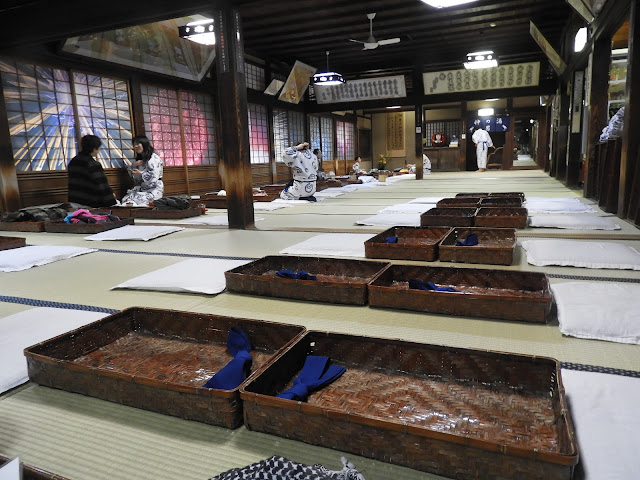
 The wooded bathhouse is  multiple stories tall and with access limited to stories based on how much you pay. We got the second cheapest price allowing us to have tea and a cookie in a large open room on the second floor. The tea and the cookie are not worth the extra price. The tea is just macha from a machine and the cookie is nice but sort of bland. What is worth the extra is that you can relax and socialize in the onsen without having to leave directly after your bath. Amenities (soap, shampoo, towel, etc) are not free so bring your own if you would like to save a few yen.

There are two men's baths and one female bath. All are very very full. There is no view from the bathhouse other than high ceilings and tiled walls. Despite the lack of scenery the bath house is very lovely and relaxing. A great place to socialize with friends and experience part of Japanese culture. The water is very hot and I definitely alternate with a cool rinse every so often to keep from overheating.
Dogo Onsen, Matsuyama, Japan
 At night the onsens lights are lit up and there is a covered area where you can shop or find a restaurant. There is a brewery nearby as well and they actually have a pretyt wide variety of local beers.

Dogo Onsen at Night, Matsuyama, Japan
 Izakayas so far all have a pretty similar layout including booths with sliding screen doors to give you privacy. It feels more squishy but you do get some illusion of privacy even if you are not spared the noises of the bar. I much prefer being seated at the actual bar where you can socialize but when you come in as a group they will never sit you at the bar sadly. Makes sense because it often has very few seats.
Getting cozy in an izakaya in Matsuyama
 Our hotel (Mainstays) was located right across from the canal making it a very enjoyable walk back from the izakaya. 
Canal in Matsuyama at Night

Matsuyama Castle was a quick walk along the canal and through a big open park. The canal had a variety of birds including Cormorants, Swans, Ducks and Egrets. Turtles were plentiful on the spaced out wooden platforms.
Red-eared Slider (Trachemys scripta elegans)
 A children's festival was going on so we got to listen to some music, enjoy some festival food and yeah also played some games with he kids.
Childrens Festival in Matsuyama

The castle sits atop a large hill that is wooded but not with very old trees. Historically the trees were cut so that the castle would have a view of potential attackers. It is a VERY well defended castle with numerous towers, walls, archer slits, rock drops and fortified gates to squish the enemy into tight spaces.

Matsuyama Castle Map

Matsuyama Castle, Japan

Matsuyama Castle, Japan
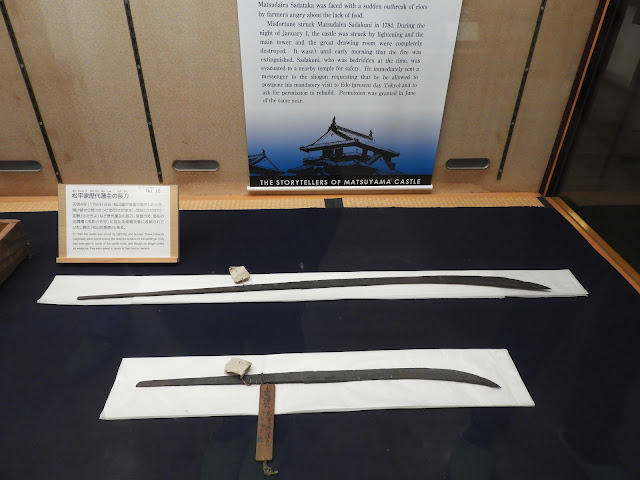
Signs are always in both English and Japanese. The signs present in the castle talk about how it has been destroyed multiple times including once being hit by lightening and once by an arsonist. Inside the castle signs discuss many of the artifacts that they have on display including swords, armor and scrolls.
Matsuyama Castle, Japan


Other than the displays the castle is very empty (and cold!) with no furniture or indication of how people lived. None of the signs actually discuss any battles held at the castle or the way that the people lived in the castle back then. It is hard to imagine these things with the castle so empty. A small section within the first set of walls likely held a garden for food that is now converted into a area with sakura trees. There was a well at the castle so its pretty obvious how they got water.
Matsuyama Castle, Japan

Matsuyama Castle, Japan
But there was no sign of a kitchen, food storage, bunks for guards and not even one fireplace to keep anyone warm! The castle was very nice to visit and was definitely the most impressive castle I have seen so far in Japan but I would have liked to get more of these little details. Maybe they don't put it on signs because Japanese are taught it in history class so it is just very basic knowledge to them.

Friday, 6 April 2018

Japanese Dashi and Miso Soup Recipe

Miso soup is a classic Japanese side dish to accompany a wide variety of meals or to serve as a appetizer before a meal. Making a good miso soup is very very easy and I found this really simple basic recipe to add a little extra something warm to a meal on a cold rainy day in Japan or as a nice appetizer for hungry guests as they wait for the main course.


To make miso soup you have to first make Dashi which is a type of soup stock/base that is used in a lot of Japanese dishes including miso soup or simmered tofu, fish or vegetables. It can also be added to vinaigrettes for salads.


This recipe for miso soup serves 2 people.

Ingredients:
3 cups water
1 ~10x10xcm sheet Kombu (type of seaweed)
2 pinches of Bonito Flakes (shaved flakes of dried fish) maybe about 1/4 -1/2 cup
1/2 cup Green Onion chopped
4 tbsp Miso paste (NOT red miso)

Primary Ingredients for Miso Soup

You can also optionally add other ingredients such as cabbage, tofu, etc. for additional substance. For vegetarian miso soup just leave out bonito flakes.

Method:
Step 1. First make dashi  by boiling water, kombu and bonito flakes.  I typically add the bonito flakes after the water is boiling with the kombu but some recipes say to add this even later and other say you should even soak the kombu before boiling. The kombu should soften completely and the water should change colour a little bit.You will be able to smell and taste when it is ready. I typically boil it on a medium heat for at least half an hour.

Step 2. You can optionally strain out the kombu and bonito flakes or leave these in. Mostly the bonito flakes are not left in and the kombu is cut into smaller pieces and left in the soup.

Step 3. Let dashi cool on a low heat and add miso paste when it is no longer boiling. Stir well.

Step 4. Serve and top with green onion and any other desired toppings.

Enjoy!

Spring in the Rice Fields of Japan

The rice fields of Japan are a noticeable hotspot for breeding amphibians in the spring. As the fields are filled will water amphibians start to call. It starts with a few males calling alone in the fields but turns into a deafening chorus within a few days.


 Japanese Treefrogs (Hyla japonica) are quite small frogs only a about 3-4 cm long. They are bright green with brown sides and flecks with gold on the legs and sides. They are very loud and create a deafening chorus in the rice fields.
Japanese tree frog (Hyla japonica)
Japanese tree frogs (Hyla japonica)

Japanese tree frog (Hyla japonica)

Japanese tree frog (Hyla japonica)

Japanese tree frog (Hyla japonica)

Japanese tree frog (Hyla japonica)
Japanese fire belly newt (Cynops pyrrhogaster) are endemic to Japan. Fire-belly Newts are frequently found in the pet trade. They are dark and pebbly on the skin above and speckled red underneath. Although they are quite poisonous to eat they don't appear to have a huge impact when handling.  
Japanese fire belly newt (Cynops pyrrhogaster)

Japanese fire belly newt (Cynops pyrrhogaster)

Japanese fire belly newt (Cynops pyrrhogaster)

Japanese fire belly newt (Cynops pyrrhogaster)

Japanese fire belly newt (Cynops pyrrhogaster)

American Bullfrog (Lithobates catesbeianus) is a species not native to Japan and was found along the road on a rainy night. It looks like a typical ranid frog and the colour and pattern is somewhat variable. Tympanum is always as big as the eye or bigger.

American Bullfrog (Lithobates catesbeianus)

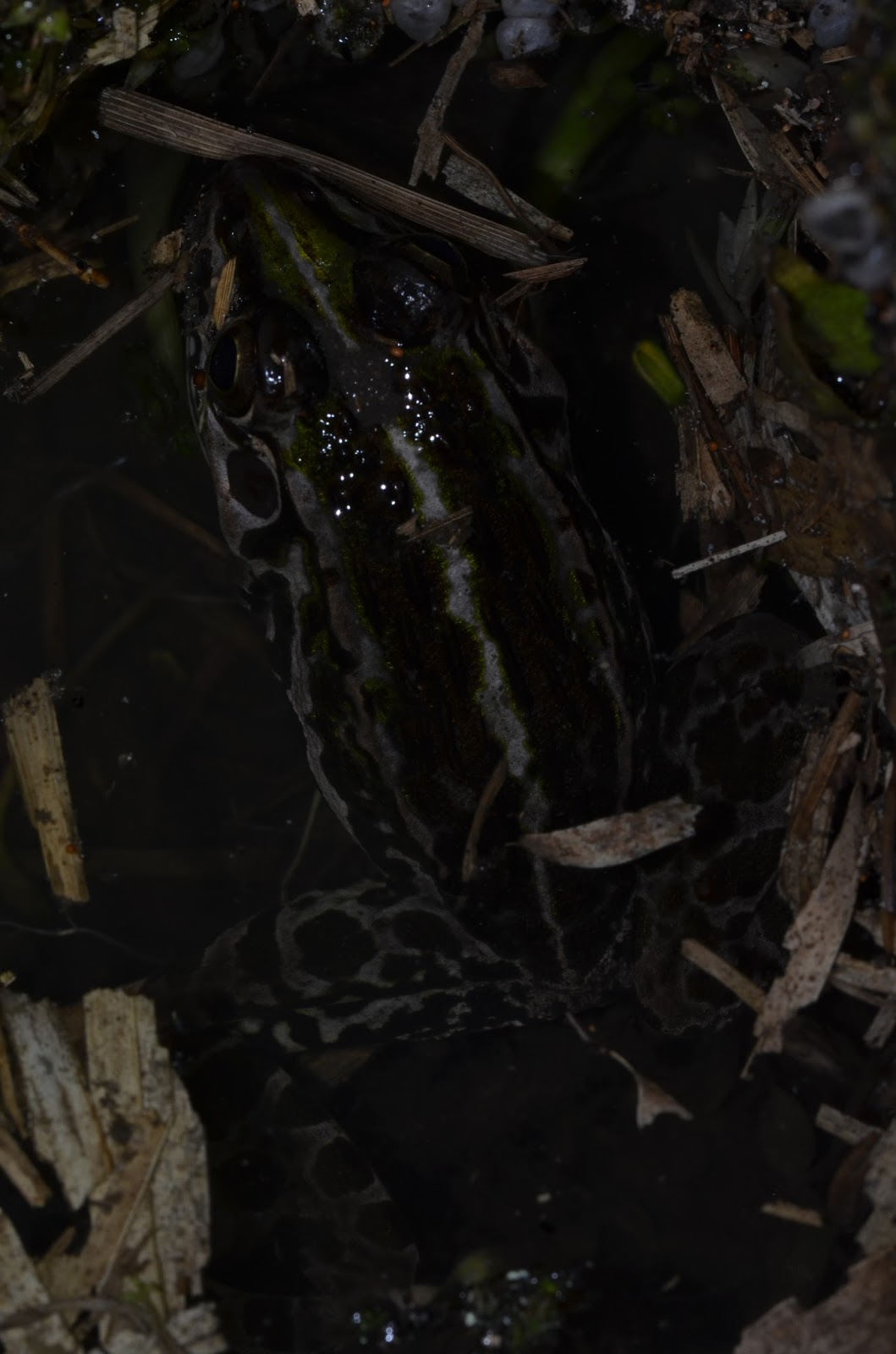
Wrinkled Frogs and Paddy Field Frogs were less common in the rice fields but you can find them because the calls will stand out against all of the Japanese Treefrog calls.
Wrinkled Frog  (Glandirana rugosa)
Paddy Field Frog
With all of the amphibians crawling around the ponds there was obviously things around to eat them as well. During the day you could see herons and egrets wading through the shallow waters but in the evening the snakes come out to feast. I saw my first Four-lined Snake heading towards it's nightly meal in the rice fields..
Four-lined Snake (Elaphe quatuorlineata)

Thursday, 5 April 2018

Iya Valley, Japan

Happy Raft is at
Happy Raft
Rafting was fun and full of amazing scenery. The rapids we went down weren't extremely challenging but apparently the harder ones you only get to if you do the full day tour rather than the half day tour as we did. The waters are cold, clear and blue, alternating between rapids and calm pools. It provides a nice balance between just floating down the river while watching the scenery and enjoying the adventure of the rapids.
Three people in a ducky at Happy Raft
View of the river near Happy Raft
Bridge to nowhere along highway 32 in Iya Valley. This goes to a small trail down to the river where a fountain of stairs and possibly a building had been washed away. Possibly a trail previously went up the mountain but it appears to be overgrown now. The bridge is still in good shape and has a nice view of the river.

Bridge to nowkere in Iya Valley, Japan
 Flora in Japan appears to be similar to the genera we have in Canada. Finding this very cool species of Arisaema near the bridge to nowhere was a treat.
Arisaema
We stopped at a small Onsen (Japanese bath house) on the way at . It was only 510JY entry fee. The girls and boys bath houses are separate. The change rooms with lockers lead to an area where you can wash yourself before entering the hot bath. The bath is shallow and has minerals that make it have a smooth feel and your skin ends up soft. Most onsens are in closed off rooms but this one had a view over the river through a large window.
Matsuogawa Onsen

Monday, 2 April 2018

Nishigawa Flower Park (西川 花公園), Kochi Prefecture, Japan

A bike ride to Nishigawa Flower Park (西川 花公園) was very scenic including mountains and rice fields with scenic Japanese style houses.
Countryside of Kochi Prefecture

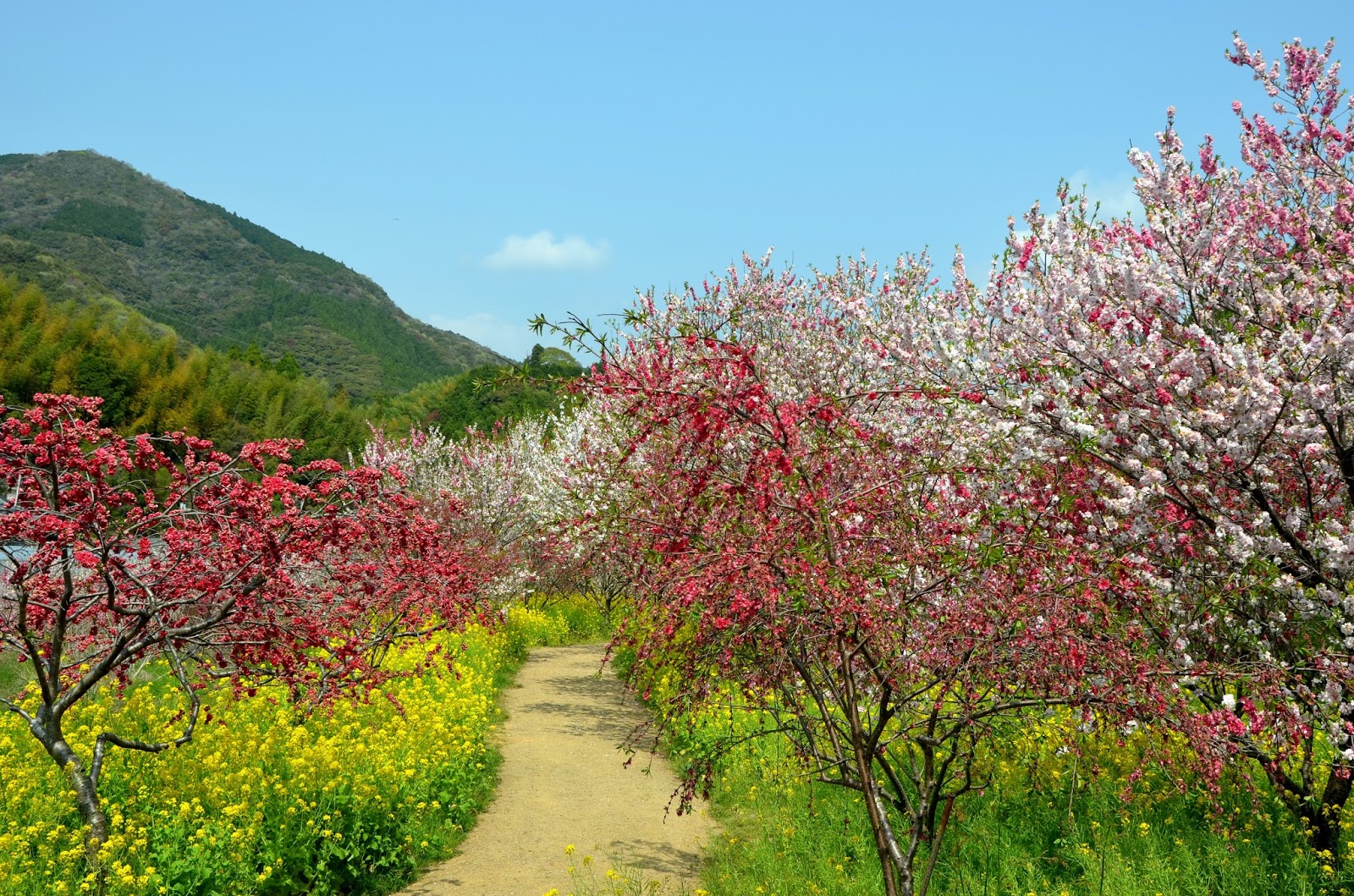
 Nisigawa Flower Park is set in a small valley with fields. It is across from Kunshikata Shrine (君子方神社). The sakura trees are growing up a small hill with mustard (Brassica rapa) fields underneath. It creates a very picturesque view with the trails and mountains.

Nishigawa Flower Park

Nishigawa Flower Park

Xylocopa appendiculata ssp. circumvolans at Nishigawa Flower Park
The park was buzzing with pollinators including many honeybees and a very large species of bee - Xylocopa appendiculata ssp. circumvolans.
Nishigawa Flower Park

Nishigawa Flower Park
As well as gorgeous sakura trees many other small wildflowers growing underneath.  Many of these I expect are common weeds but when you aren't used to seeing them they can be quite interesting. 

Purple Crown Vetch  (Securigera varia)

Viola

Potentilla
Spring is here and treefrogs are calling, newts are in the small ponds of water and skinks are climbing over the sunny surfaces of rock face.
Japanese Treefrog (Hyla japonica)